A salt water pool is still a chlorine pool, because a salt chlorinator makes chlorine from dissolved salt, which gives steadier levels and softer-feeling water with less chemical handling. Manual chlorine costs less to set up and suits simple systems. In Dubai's heat, both need regular testing, pH control and good filtration to stay clear.
The better choice depends on your equipment, the stone around your pool and how hands-on you want to be. This guide compares both, side by side.
How does a salt water pool make chlorine?
A salt water pool uses a chlorinator, also called a salt cell, fitted into the pipework after the filter. As water passes through, a low electrical current splits the dissolved salt and produces chlorine. The chlorine sanitises the water, then turns back into salt, so the cycle repeats.
The salt level is far lower than seawater. Most swimmers describe the water as soft rather than salty.
Because the sanitiser is the same chemical, a salt pool needs the same water balance as any other pool. Free chlorine, pH, alkalinity, stabiliser and calcium hardness all still matter. The control unit sets how much chlorine the cell produces, and you adjust it as the seasons change.
Is salt water gentler on skin and eyes?
Many swimmers find it gentler. Steady chlorine output tends to mean fewer spent chlorine compounds, called chloramines, which cause the sharp "pool smell" and sore eyes. Poor pH balance causes irritation in any pool, so testing still matters.
How does a traditionally chlorinated pool work?
A traditional pool is sanitised by adding chlorine directly, as liquid, granules or slow-dissolving tablets, either by hand or through a feeder or dosing pump. It needs no salt cell, so the set-up is simpler and cheaper. The trade-off is more frequent dosing and more chemical handling and storage.
Each form of chlorine behaves a little differently:
- Liquid chlorine. Fast acting and adds no stabiliser or calcium. It loses strength faster when stored in heat, so keep it shaded and buy only what you will use.
- Granular chlorine. Easy to measure for shocking. Some types add calcium, which can build up as scale in hard water.
- Tablets. Dissolve slowly in a floater or feeder. Most contain stabiliser and lower pH, so stabiliser levels creep up over a season.
Manual dosing works well when someone tests and doses on a regular schedule. Levels tend to swing more between doses, especially on hot, sunny days when chlorine burns off quickly.
How do salt and chlorine pools compare in Dubai?
Salt systems win on steady chlorine, water feel and less handling of chlorine products. Manual chlorine wins on set-up cost, simplicity and equipment compatibility. Neither removes the need to test, brush and clean the filter, and both need extra attention after dust storms and in peak summer.
| Factor | Salt chlorinator | Manual chlorine |
|---|---|---|
| Chlorine level | Steady, produced while the pump runs | Rises after dosing, falls between doses |
| Water feel | Softer, fewer chloramine smells | Can feel harsher when levels swing |
| Chemical handling | Little chlorine to store; acid still needed | Regular buying, storing and dosing |
| pH | Tends to drift upwards | Depends on the product used |
| Equipment | Cell and controller to clean, check and eventually replace | Feeder or dosing pump, if fitted |
| Set-up cost | Higher, for the cell and controller | Lower |
| Surroundings | Salt can mark porous stone and some metals | No added salt |
| After storms or heavy use | Often needs a manual shock as well | Shock as normal |
Why does pH drift upwards in a salt pool?
The process that makes chlorine in a salt cell also produces a by-product that raises pH. So salt pools usually need acid added more often than manually chlorinated ones. If pH runs high, chlorine works poorly, scale forms faster and the water can turn cloudy, even when the chlorinator is running.
Test pH regularly and keep it within the range your test kit or chlorinator maker recommends. Some owners fit an automatic pH controller that doses acid. It saves effort, but it still needs checking and refilling.
If you are not confident handling pool acid, leave it to a pool technician. Keep children and pets away while any chemical is being added.
Why do salt cells scale up in Dubai?
Scale forms on the cell's plates when calcium comes out of the water, which happens faster in warm water and at high pH. Dubai pools run warm for much of the year and lose a lot of water to evaporation. Each top-up adds more minerals, so calcium can build up over time.
A scaled cell produces less chlorine. The pool can go cloudy or green even though the controller looks normal. Many units reverse polarity to shed scale, but most cells still need inspecting and cleaning from time to time.
How do you check a salt cell safely?
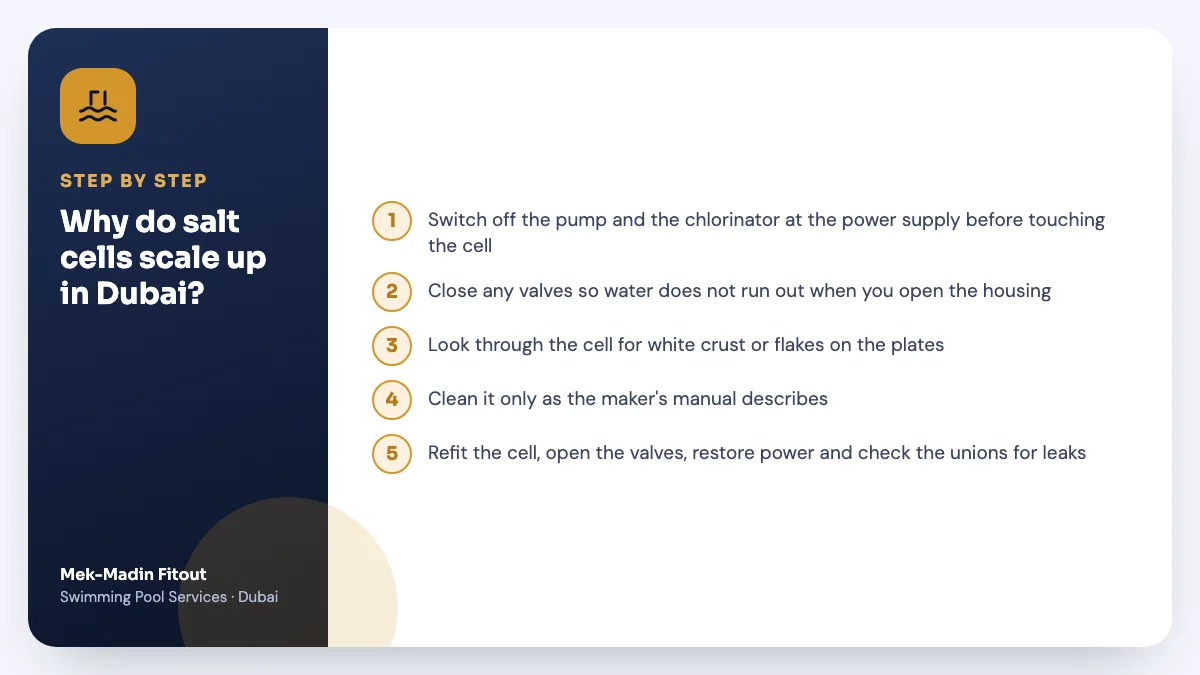
- Switch off the pump and the chlorinator at the power supply before touching the cell.
- Close any valves so water does not run out when you open the housing.
- Look through the cell for white crust or flakes on the plates.
- Clean it only as the maker's manual describes. Many use a weak acid soak, which must be mixed and handled with care.
- Refit the cell, open the valves, restore power and check the unions for leaks.
If the controller shows a fault, the cell keeps scaling or the power trips, leave it switched off and call a professional. Do not open the control unit or any electrical housing yourself. Cell cleaning can also be part of regular pool servicing and salt chlorinator checks.
Is salt water bad for pool surroundings and equipment?
It can be, if the materials are not suited to it. Splash-out and wet feet carry salt onto the deck, where it crystallises in porous stone and grout, and some metal fittings and ladders corrode faster. Check that your pump, heater or pool chiller is approved for salt water.
- Natural stone coping and decks. Softer, porous stones can flake or pit as salt crystals form. Sealing helps, and so does rinsing the deck with fresh water.
- Metal fittings. Use grades suited to salt water, and look for rust stains around ladders, rails and screws.
- Pool chillers and heaters. Pool chillers are common in Dubai. Check with the maker that the heat exchanger is suitable for salt water.
- Backwash water. Salty backwash water can harm lawns and plants. Check where it drains and whether your community has rules on discharge.
- Coastal homes. On waterfront plots, such as on Palm Jumeirah, sea air already attacks metal, so fittings need closer checks whichever system you choose.
Which system copes better with a Dubai summer?
Both can work well, but hot water and strong sun use up chlorine quickly. A salt chlorinator may need its output turned up or the pump run longer, while a manual pool needs more frequent dosing. In both, stabiliser helps protect chlorine from sunlight.
Neither system copes with a sudden heavy load on its own. After a dust storm or a pool party, a salt pool often needs a manual shock as well, because the cell cannot produce chlorine fast enough to catch up. Our guide to recovering a green pool after a sandstorm explains the order of work.
For the routine tasks that keep either type of pool stable through the hot months, see our week-by-week summer pool care routine.
Can you convert a chlorine pool to salt water?
Usually, yes. A salt chlorinator and control unit are fitted into the return pipework after the filter, and pool-grade salt is added to reach the level the maker sets. Before converting, check that your equipment, metal fittings and stone surroundings suit salt water, and that there is a safe power supply.
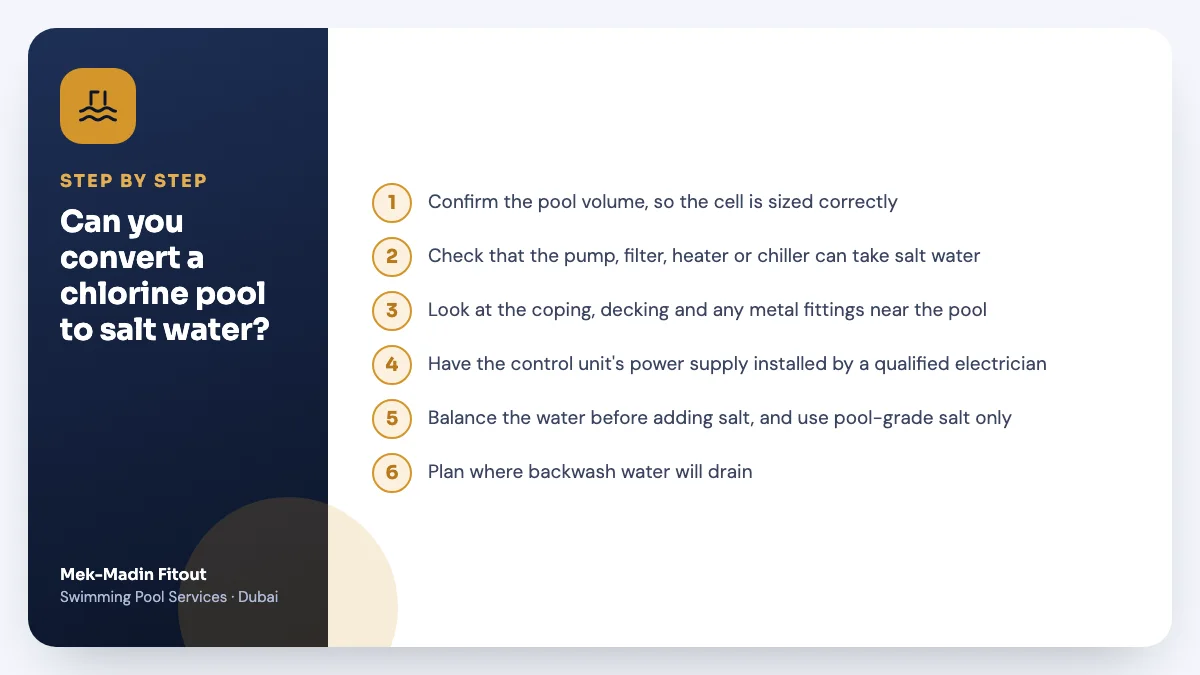
- Confirm the pool volume, so the cell is sized correctly.
- Check that the pump, filter, heater or chiller can take salt water.
- Look at the coping, decking and any metal fittings near the pool.
- Have the control unit's power supply installed by a qualified electrician.
- Balance the water before adding salt, and use pool-grade salt only.
- Plan where backwash water will drain.
Going back from salt to chlorine is also possible. The salt stays in the water until it is diluted by backwashing, splash-out and partial water changes.
Which should you choose for your pool?
Choose a salt chlorinator if you want steadier water and less chlorine to buy and store, and you are happy to keep up with pH and cell cleaning. Choose manual chlorine if you want lower set-up costs and simpler equipment, or have natural stone and fittings that may not suit salt.
- Salt usually suits: family pools used often, owners who prefer automation, and pools with salt-rated equipment.
- Chlorine usually suits: pools used now and then, soft natural stone surrounds, older equipment not approved for salt, and holiday homes with a regular pool service.
Whichever you choose, the water still needs testing. If your pool loses water faster than you expect, a bucket test for pool leaks helps rule out a leak before you blame evaporation.
When should you call a pool professional?
Call a professional if the chlorinator shows a fault, the cell keeps scaling, readings will not stay in range, or you are unsure about adding acid or salt. Get advice before converting a pool to salt, as equipment compatibility and the electrical supply need checking by someone qualified.
Our swimming pool maintenance team services salt chlorinators, tests and balances water, and cleans filters on both salt and chlorine pools across Dubai. Call or WhatsApp +971 52 884 8916, and we will confirm a visit time when you call.
FAQs
Does a salt water pool still need chlorine?
Yes, but the cell makes it from salt. You may still add chlorine as a shock after storms or heavy use. Stabiliser, pH and alkalinity need checking just as in any pool.
Will a salt water pool damage my fittings?
Salt can speed up corrosion of some metals and mark porous stone. Fittings made for salt water, sealed stone and regular rinsing reduce the risk. Check your equipment maker's guidance before converting.
Is a salt pool cheaper to run?
It can be, as you buy salt and acid rather than regular chlorine. Against that, the cell and controller cost more to buy, need cleaning and eventually need replacing. The balance depends on how much the pool is used.
Do I need to add salt regularly?
Not often. Salt does not evaporate, so the level only drops when water leaves the pool through backwashing, splashing or leaks. Test the salt level and top up as the chlorinator maker advises.