Dubai's green building regulations, now applied through the Al Sa'fat rating system, require solar water heating in many new buildings, and new villas are often affected. The exact requirement depends on the building type, the approving authority and the permit date. If you are building or extending a villa, your consultant should confirm the current rules early in design.
This guide explains how the rules usually work in practice, where they show up in the approval process and how to choose and look after a system that meets them. It is general information, not legal or technical advice. Regulations are updated from time to time, so always check the current requirements with Dubai Municipality, DEWA and your consultant.
If you are still deciding whether solar hot water makes sense for an existing home, our guide on whether a solar water heater is worth it in Dubai covers that question.
What do Dubai's green building rules say about solar water heating?
Dubai's green building regulations, applied through the Al Sa'fat rating system run by Dubai Municipality, require part of the hot water demand in many new buildings to be met by solar. Al Sa'fat sets a minimum standard that new buildings must meet, and solar water heating is one of the energy measures it addresses.
According to Dubai Municipality's Al Sa'fat page, Al Sa'fat replaced the Dubai Green Building Regulations and Specifications "starting from 19 October 2020", and it "includes a set of mandatory requirements for all new buildings to obtain the Silver Sa'fa". The second edition of Al Sa'fat, dated January 2023, says hot water systems "shall be configured utilizing a sustainable hot water heating technology, such as solar hot water", with exceptions where that would be impractical or where point-of-use electric heaters would be more efficient. It adds that "the system designer shall target 75% of the total hot water daily demand being produced by the solar hot water system".
Dubai has had green building regulations for new buildings for a number of years. Al Sa'fat is the Dubai green building rating system run by Dubai Municipality. It sets a minimum standard that new buildings must meet, with higher levels for projects that go further.
The regulations cover energy, water, materials and indoor comfort. Solar water heating is one of the measures they address, because heating water with electricity is a large share of energy use in many homes. For many new buildings, part of the hot water demand has to be met by solar.
DEWA is the utility that connects the villa's electricity and water. It also sets technical requirements and publishes guidance on energy and water efficiency, so your consultant may need to show compliance with DEWA requirements as well.
Why does this guide not list every category, percentage or date?
Apart from the published wording quoted above, we do not quote building categories, percentages, dates or article numbers in this guide. How they apply depends on the version of the rules in force when your permit is applied for, and on your building type. Your consultant works from the current documents and is the right person to confirm them.
How do the solar water heating rules affect villa owners?
How the solar water heating rules affect a villa owner depends on the project. A new build plans solar from the first design stage, a developer handles compliance on a newly bought villa, an extension may bring in a building permit, and a like-for-like replacement of an old system is usually treated as maintenance.
When should solar water heating be planned for a new villa?
If you are building a villa on your own plot, solar water heating is something to plan from the first design stage. Your consultant usually shows the system on the drawings and in the compliance submission. That means roof space, structural loads, pipe routes and the tank position are fixed early.
Leaving it until construction is nearly finished causes problems. Roof parapets, AC units and water tanks may already take up the best spots. Pipe routes may need to be cut into finished walls.
Who handles compliance when you buy a new villa from a developer?
When you buy from a developer, the developer and its consultant handle compliance. Many recently built villas hand over with a solar water heater already installed. Ask for the system's documents at handover, including the product details, any warranty and the commissioning record.
Do the rules apply when you extend or reconfigure a villa?
Adding bedrooms or bathrooms changes how much hot water the villa needs. Depending on the scope, an extension may need a building permit, and the authority may look at how the new areas get hot water. Whether the green building requirements apply to your extension is a question for your consultant.
You will usually also need a no-objection certificate from your master developer or community management. Our guide to villa renovation permits in Dubai explains how those approvals usually work.
Is replacing an old solar water heater treated as maintenance?
Replacing an old or failed solar water heater with a similar one is usually treated as maintenance. If you change the size, the position or how visible the system is from the street, check with your community first. Do not remove a solar system and replace it with electric heaters only without checking, as it may have been part of the villa's original approval.
Where does solar water heating fit in the villa approval process?
Solar water heating runs through every stage of villa approval, from concept design and the design submission to community approval, construction, inspections, and completion and DEWA connection. The consultant usually shows the system on the drawings and in the compliance submission, so roof space, pipe routes and the tank position are fixed early.
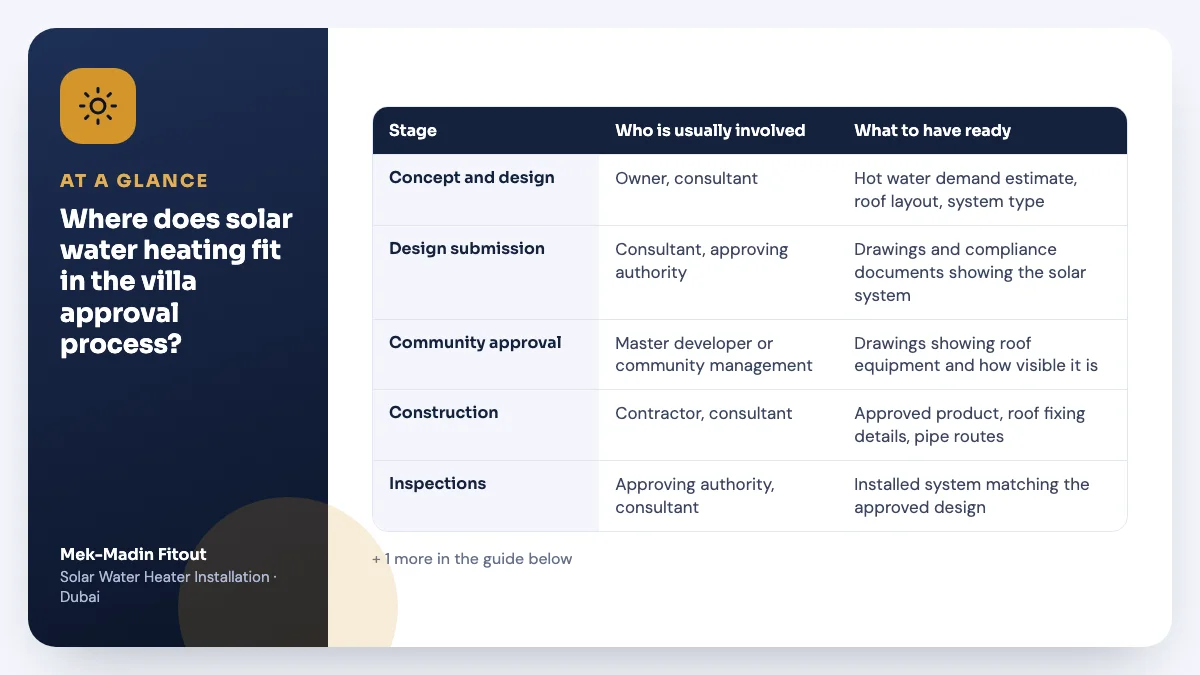
The stages below are a general outline. The names, order and authority vary. Villas in areas under Trakhees or the Dubai Development Authority, for example, may follow those authorities' own building approvals.
| Stage | Who is usually involved | What to have ready |
|---|---|---|
| Concept and design | Owner, consultant | Hot water demand estimate, roof layout, system type |
| Design submission | Consultant, approving authority | Drawings and compliance documents showing the solar system |
| Community approval | Master developer or community management | Drawings showing roof equipment and how visible it is |
| Construction | Contractor, consultant | Approved product, roof fixing details, pipe routes |
| Inspections | Approving authority, consultant | Installed system matching the approved design |
| Completion and connection | Approving authority, DEWA | Completion documents, commissioning records |
The most common delay is a mismatch between what was approved and what was installed. If the contractor wants to change the product, tank size or position, the consultant should check whether a revised approval is needed.
How do you choose a compliant solar water heater?
A compliant solar water heater matches the approved design, uses an acceptable product and is installed and commissioned properly. In practice that means keeping the product documents, sizing the system to the villa's hot water demand, placing collectors in clear sun, fitting a mixing valve and relief valves, and sealing roof fixings into the waterproofing.
Which product documents should you keep?
Ask your consultant whether the product needs to be tested, certified or listed for use in Dubai. Keep the technical data sheet, the installation manual and the warranty terms. Inspectors and future buyers may ask for them.
How should a solar water heater be sized?
The system should be sized to the villa's hot water demand, not to a standard kit. Your consultant or installer works this out from the number of bathrooms, kitchens and occupants. An undersized system relies heavily on the electric backup, which defeats the purpose.
Where should the collectors and tank go?
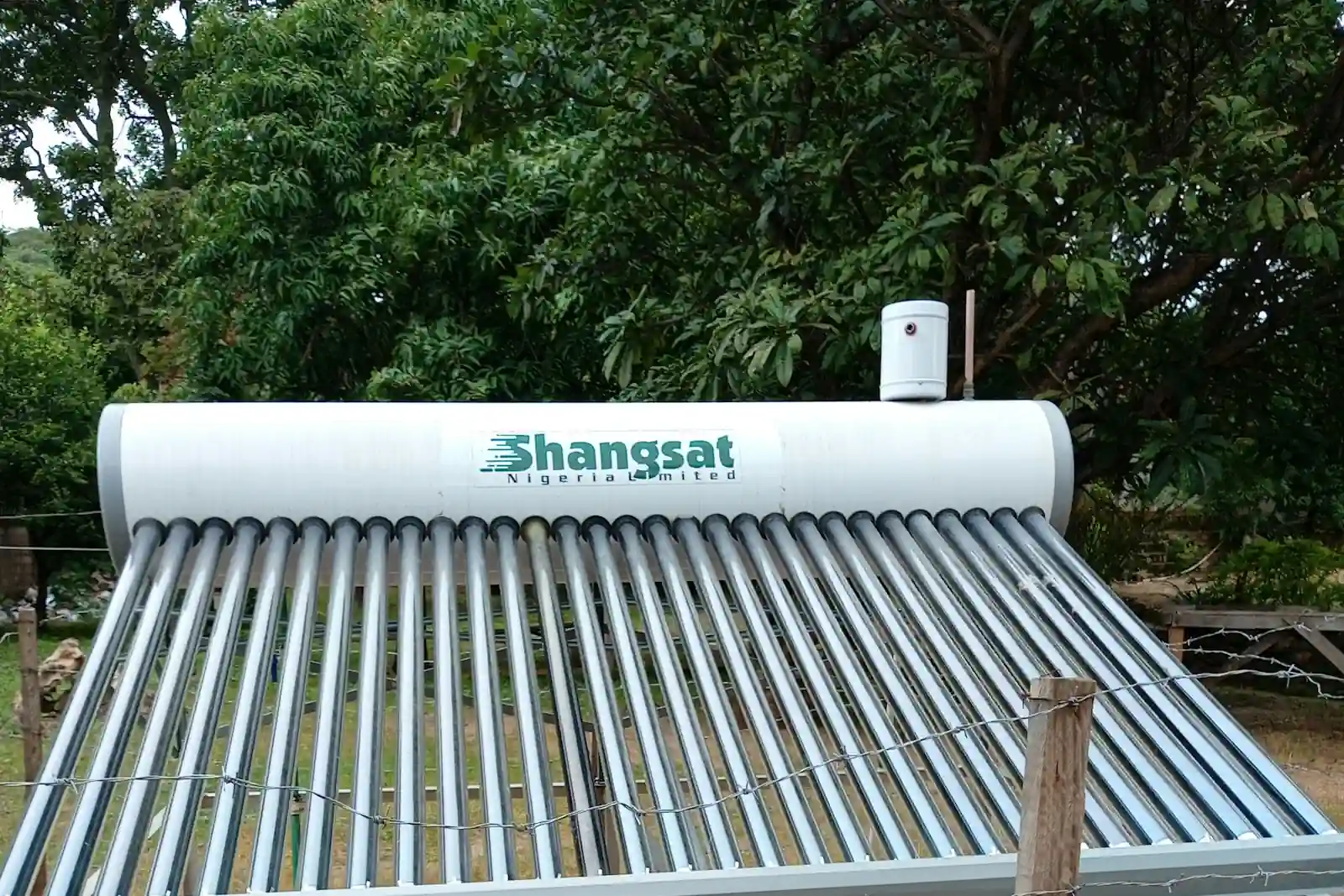
Collectors need a clear, sunny position for most of the day. A roof-mounted tank adds weight, so the structure must be checked. A pumped system with an indoor tank avoids that load but adds a pump and controller.
What safety components does a solar water heater need?
Every system should have a thermostatic mixing valve to stop scalding at the tap, and pressure and temperature relief valves. These are standard on a good installation, and an inspector may check them.
How should solar frames be fixed to a waterproofed roof?
Every bolt or bracket through the roof is a possible leak. The fixings should be sealed into the roof waterproofing, not just pushed through it. On a new villa, plan the frames before the membrane goes down so penetrations are designed in.
How do you keep a solar water heater working after handover?
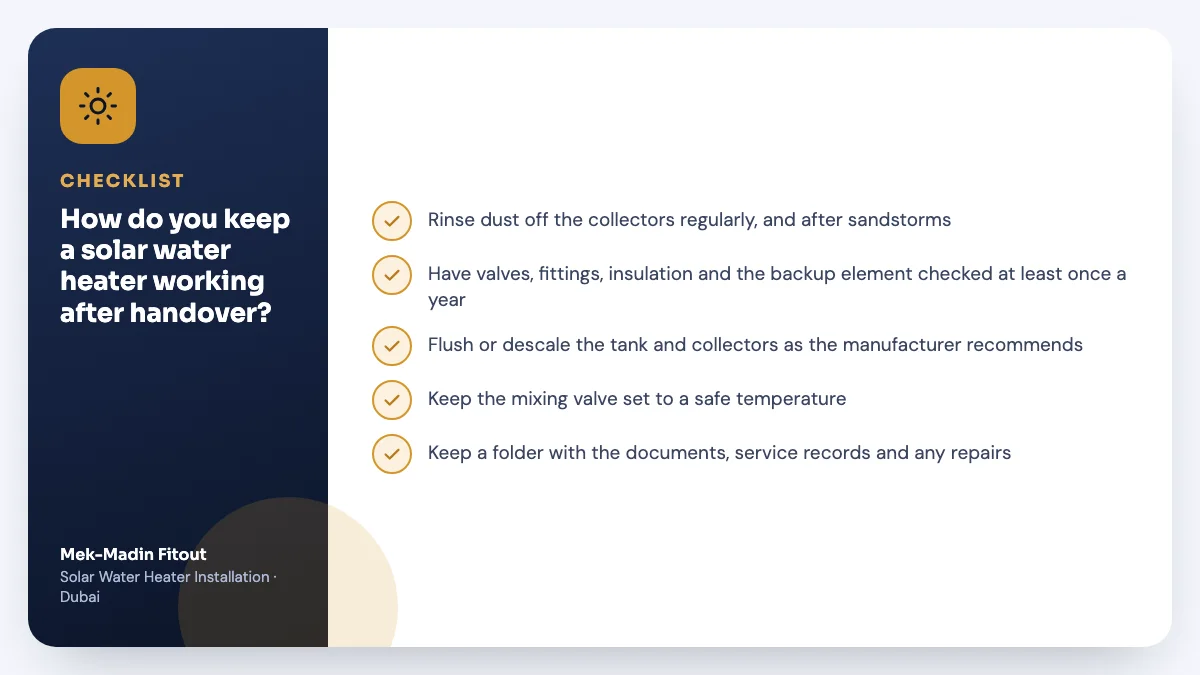
To keep a solar water heater working after handover, rinse dust off the collectors regularly and after sandstorms, have valves, fittings, insulation and the backup element checked at least once a year, descale as the manufacturer recommends and keep service records. A system that is switched off or bypassed no longer saves energy.
A solar water heater that was approved but no longer works does not save energy. It may also cause problems when you sell or apply for future works.
Keep it working with a simple routine:
- Rinse dust off the collectors regularly, and after sandstorms.
- Have valves, fittings, insulation and the backup element checked at least once a year.
- Flush or descale the tank and collectors as the manufacturer recommends.
- Keep the mixing valve set to a safe temperature.
- Keep a folder with the documents, service records and any repairs.
If the system is switched off, bypassed or leaking, fix it rather than living with electric backup alone.
Who should design and install solar water heating for a villa?
Your consultant handles compliance and submissions, and an experienced installer makes sure the system on the roof matches what was approved and works safely. Solar water heating on a new or extended villa involves design, approvals, roof work and plumbing.
We offer solar water heater installation and servicing in Dubai, including new systems, replacements, roof sealing and commissioning. We can work with your consultant on approved designs. Call or WhatsApp +971 52 884 8916 and we will confirm a visit time when you call.
FAQs
Is a solar water heater mandatory for new villas in Dubai?
For many new buildings, Dubai's green building regulations require part of the hot water to come from solar. Whether and how this applies to your villa depends on its type, its approving authority and the rules in force when the permit is issued. Your consultant can confirm.
What is Al Sa'fat?
Al Sa'fat is Dubai's green building rating system, run by Dubai Municipality. It sets minimum sustainability standards for new buildings, covering areas such as energy, water and materials, with higher levels for projects that go further.
Do I need approval to replace my villa's solar water heater?
A like-for-like replacement is usually treated as maintenance. If you change the system's size, position or appearance, check with your master developer or community management first. Do not swap solar for electric-only heating without checking.
Who checks that the solar water heater meets the rules?
On a new villa, the consultant prepares the compliance documents and the approving authority reviews and inspects the work. DEWA may also have requirements to meet before the villa is connected. The installer's job is to fit what was approved and commission it properly.