
A bathroom drain smell in a Dubai home usually means a floor trap has lost its water seal. The trap holds a small pool of water that blocks sewer gas, and when it dries out, clogs with hair and soap or loses its seal, the smell comes straight up. Refilling and cleaning the trap fixes most cases.
If the smell keeps coming back after that, the cause is often a loose connection, a failed toilet seal or a vent problem. This guide explains how to tell which one you have.
What causes a drain smell in a bathroom?
Most bathroom drain smells come from a dry or dirty floor trap. Less often, the cause is a basin trap, a leaking toilet seal, a loose pipe joint behind a panel or a problem in the building's drainage stack. The table below shows the usual suspects, the clues that point to each one and what normally fixes it.
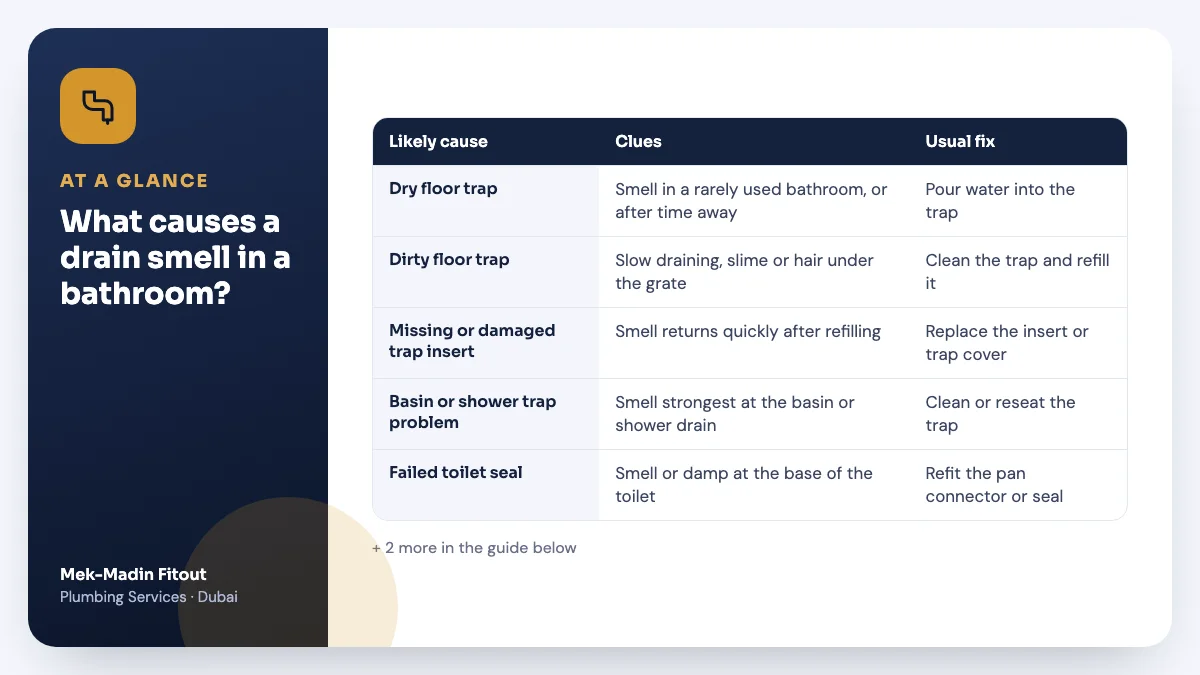
| Likely cause | Clues | Usual fix |
|---|---|---|
| Dry floor trap | Smell in a rarely used bathroom, or after time away | Pour water into the trap |
| Dirty floor trap | Slow draining, slime or hair under the grate | Clean the trap and refill it |
| Missing or damaged trap insert | Smell returns quickly after refilling | Replace the insert or trap cover |
| Basin or shower trap problem | Smell strongest at the basin or shower drain | Clean or reseat the trap |
| Failed toilet seal | Smell or damp at the base of the toilet | Refit the pan connector or seal |
| Loose joint or cracked pipe | Smell near an access panel or boxed-in pipe | Plumber to trace and repair |
| Building stack or vent issue | Smell in several flats, or gurgling drains | Building management |
How does a bathroom floor trap work?
A floor trap is a U-shaped or bottle-shaped fitting under the floor grate that always holds some water, called the water seal. Waste water flows through it and out to the drain, but the water left behind blocks air from the sewer pipes. As long as the seal is there, smells stay below the floor.
In many Dubai flats and villas, the floor trap also takes waste from the basin, bath or shower through side inlets. Each time those are used, water runs through the trap and keeps its seal topped up. That is why a busy family bathroom rarely smells, while a guest bathroom can.
Some traps have a removable insert or cleaning plug under the grate. If that part is missing, cracked or not seated properly, the trap may not hold a full seal even when water is running through it.
Why do floor traps dry out in Dubai homes?
Floor traps dry out mainly through evaporation, and Dubai's heat and air conditioning speed it up. A trap that nobody uses slowly loses its water until air can pass through. Pressure changes in the drainage pipes can also pull water out of a trap, even in a bathroom that is used every day.
Common reasons include:
- Unused bathrooms: guest bathrooms, maid's room bathrooms and powder rooms that are rarely used
- Time away: homes left empty over summer or between tenants
- Warm, dry air: heat in villas and air-conditioned rooms both speed up evaporation
- Siphonage: a large volume of water draining elsewhere can pull water out of the trap
- Pressure changes in tall buildings: air movement in the shared stack can push or pull on trap seals
- Floor drains with no fixtures feeding them: utility room, laundry and balcony drains
For homes that sit empty between guests, our holiday home turnover checklist includes running water through every drain.
How do you fix a dry floor trap?
Pour water into the trap to restore the seal, then clean it if the smell lingers. In most cases the smell fades once the seal is back and the room has been aired. If the smell returns quickly, the trap is losing water faster than it should, and something else is wrong.
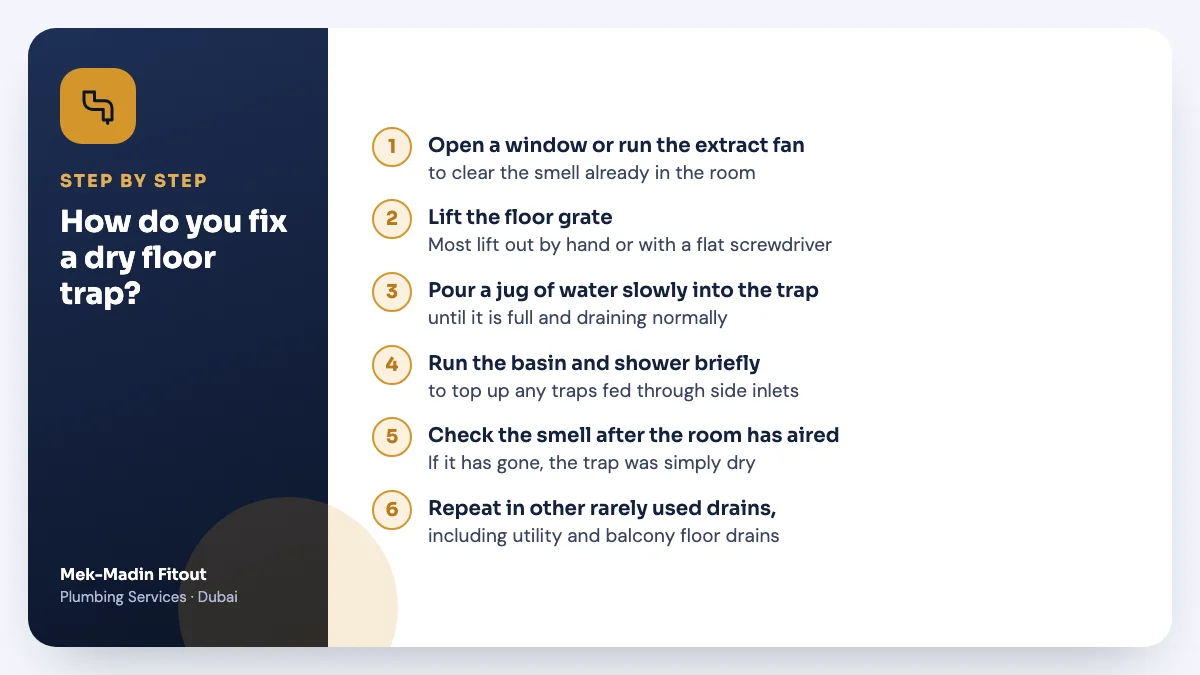
- Open a window or run the extract fan to clear the smell already in the room.
- Lift the floor grate. Most lift out by hand or with a flat screwdriver.
- Pour a jug of water slowly into the trap until it is full and draining normally.
- Run the basin and shower briefly to top up any traps fed through side inlets.
- Check the smell after the room has aired. If it has gone, the trap was simply dry.
- Repeat in other rarely used drains, including utility and balcony floor drains.
To slow evaporation in a bathroom you rarely use, some people pour a small amount of cooking oil on top of the water to form a thin film. A plumber can also fit an anti-evaporation insert or a one-way trap seal, which lets water pass but blocks air.
How do you clean a smelly floor trap safely?
Wear gloves, lift the grate, remove the hair and sludge, scrub the trap and grate, then flush with plenty of hot tap water. A trap can be full of water and still smell if soap scum and hair have built up inside it. Cleaning also helps the trap drain faster.
Take these precautions every time:
- Wear rubber gloves and keep the room ventilated
- Use a drain hook or old toothbrush to pull hair and sludge out of the trap
- Use hot tap water rather than boiling water, which can soften plastic pipe joints
- Use one cleaning product at a time and follow its label
- Never mix bleach with acid-based or ammonia-based cleaners, as this can release toxic gas
- Avoid strong chemical drain unblockers unless the label says they are safe for your pipes
Enzyme-based drain cleaners are a gentler option for regular use. They break down soap and organic build-up slowly rather than burning through it.
If grout around the trap is also dark and stained, our guide on whether to clean or regrout black grout explains what each approach involves.
How do you find where the smell is coming from?
Work round the bathroom one outlet at a time, sniffing close to each drain, the toilet base, any access panels and boxed-in pipes. Note when the smell is worst, such as after a shower, at night or when a neighbour uses water. These clues help a plumber narrow down the cause quickly.
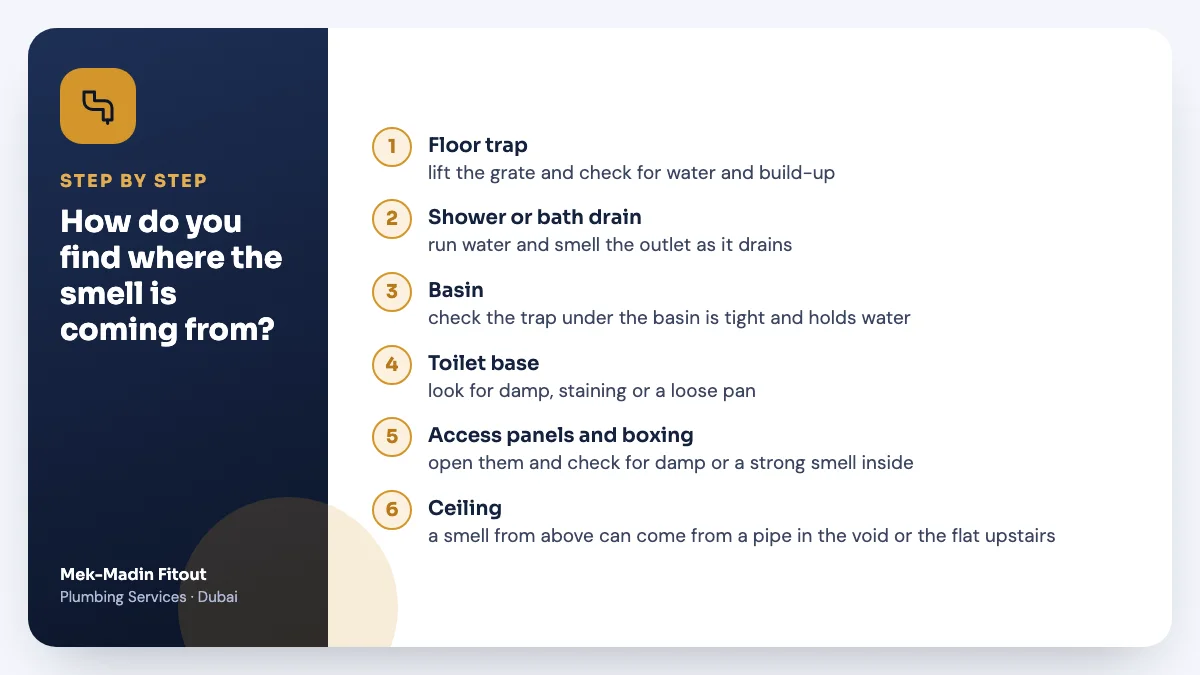
- Floor trap: lift the grate and check for water and build-up
- Shower or bath drain: run water and smell the outlet as it drains
- Basin: check the trap under the basin is tight and holds water
- Toilet base: look for damp, staining or a loose pan
- Access panels and boxing: open them and check for damp or a strong smell inside
- Ceiling: a smell from above can come from a pipe in the void or the flat upstairs
If you find water as well as a smell, treat it as a leak. Our guide to a bathroom leaking into the flat below covers how leaks are traced.
What if the smell is not coming from the floor trap?
If the floor trap is full and clean but the smell continues, the cause is usually elsewhere in the drainage. A toilet that rocks may have a broken seal, and a basin waste joint behind a vanity can work loose. Drains that gurgle when other fixtures empty suggest a venting problem, often in the building's shared system.
We often find that a smell blamed on the floor trap is actually coming from the toilet connection or a joint hidden behind a panel. These need opening up, testing and resealing, which is part of professional plumbing repair work.
In older buildings, such as many in Bur Dubai, worn traps and tired pipe joints are more common. If the smell is also in corridors or neighbouring flats, report it to building management, as the shared stack is usually the building's responsibility.
An AC unit can also pull drain smells into a room through its own condensate trap. Our guide on why an AC smells bad explains how to tell the difference.
Is a drain smell in the bathroom dangerous?
A faint drain smell from a dry trap is mainly unpleasant, but it should not be ignored. Sewer gas can contain hydrogen sulphide, which gives the rotten egg smell, along with other gases. A strong, constant smell means gas is entering the home freely, and some people get headaches or feel unwell.
If the smell is strong, open windows and leave the room until it clears. If anyone feels unwell, get fresh air and seek medical advice.
When should you call a plumber about a drain smell?
Call a plumber if the smell returns soon after refilling and cleaning the trap, if water drains slowly, if the toilet moves or if you see damp around fittings. Get help too if drains gurgle, the trap insert is broken, or the smell seems to come from inside a wall or ceiling.
A plumber can check the trap, replace damaged inserts, reseal the toilet, test joints and look at how the drains are vented. Our plumbing services in Dubai cover floor traps, blocked drains, toilet seals and leaks for flats, villas and offices.
Tell us which bathroom smells, when it is worst and what you have already tried. Call or WhatsApp +971 52 884 8916, and we will confirm a visit time when you call.
FAQs
Why does my bathroom smell like sewage only sometimes?
An intermittent smell often means the trap seal is being pulled or pushed by pressure changes, or is drying out between uses. Note when it happens. A pattern helps a plumber work out whether the trap, the venting or the building stack is the cause.
How often should I pour water into an unused floor trap?
Make it part of your regular cleaning routine, and always run water through every drain before and after you travel. If the smell still comes back between top-ups, ask a plumber about an anti-evaporation insert.
Can I pour bleach down a floor trap?
A diluted household cleaner used as the label says is usually fine. Never mix bleach with other cleaners, as some combinations release toxic gas. Bleach also does not remove hair and sludge, so physical cleaning works better.
Is a bathroom drain smell the landlord's problem?
It depends on the cause and your tenancy contract. Topping up and cleaning traps is usually routine upkeep. Broken fittings, failed seals and building drainage faults are often the landlord's or building's responsibility, so report them in writing.