

If your bathroom is leaking into the flat below, stop using the shower and bath, turn off the water to the bathroom if it is still dripping, and photograph both ceilings. Tell building management in writing. Then have the source traced properly, because the fix for failed grout is very different from the fix for a broken pipe.
A leak report from a neighbour is stressful, but most bathroom leaks follow a handful of patterns. This guide covers the first steps, how the source is found, the repair options and how costs are usually split.
What should you do first when a neighbour reports a leak?
When a neighbour reports a leak from your bathroom, stop the water, photograph your bathroom and the neighbour's ceiling, and tell building management in writing, along with your landlord if you rent. If the drip only appears after showers, stop using that shower; if it drips all the time, close the bathroom isolation valve.
How do you stop the water?
Ask your neighbour when the dripping happens. If it only appears after someone showers, simply stop using that shower until it is checked. If it drips all the time, the supply pipework may be at fault.
Most apartment bathrooms have an isolation valve near the toilet, basin or behind an access panel. If you cannot find one, close the main valve for the flat, usually in the kitchen, a utility cupboard or near the entrance.
What should you photograph and record?
Take dated photos of your bathroom floor, shower area, grout lines and the base of the toilet. Ask your neighbour for photos of their ceiling, and note any drips, stains or sagging gypsum. These records help the person tracing the leak and anyone dealing with insurance later.
Why should you tell building management?
In most towers, building management or the facilities team wants to know about leaks between units. They may send their own technician to check shared pipes and risers. Some buildings also ask for notice or a permit before any contractor starts work.
If you rent, tell your landlord in writing at the same time. If you own and let the flat, tell your tenant what is happening and when someone will visit.
How is a bathroom leak traced to its source?
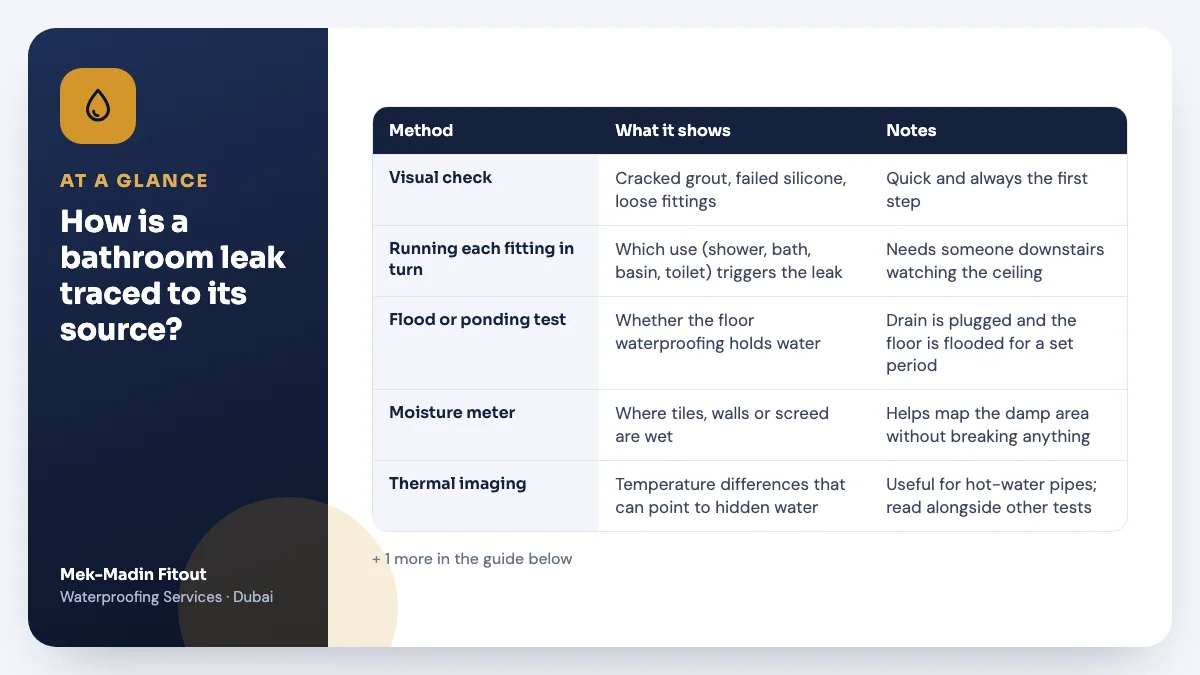
A bathroom leak into the flat below is traced by working from the cheapest and most likely causes, such as grout, silicone and waste joints, towards hidden ones like the waterproofing membrane and supply pipes. A good leak investigation avoids breaking tiles until tests show where to open up.
Bathrooms are a known trouble spot. In a July 2023 notice to customers, DEWA said that "Water tanks, bathrooms, kitchens, and swimming pools are the most likely areas where leakages can occur."
Where do bathroom leaks usually come from?
- Shower tray or floor waterproofing failure. Under the tiles, a wet-area floor should have a waterproof membrane turned up the walls. If it has split, was never turned up properly, or was damaged during earlier work, water soaks through the slab.
- Grout and silicone. Cracked grout and peeling silicone let water behind the tiles. In a sound waterproofed floor this should not leak, but in older bathrooms it often does. Hollow-sounding floor tiles can be an early sign of water getting underneath.
- Waste pipes and floor traps. The joint between the floor drain and the membrane is a weak spot. Loose waste connections under the bath or basin also leak only when water is used.
- Concealed cistern. A cistern built into the wall can leak from its inlet valve or flush mechanism, hidden behind tiles. The access panel behind the flush plate usually lets you see it.
- Supply pipes. Hot and cold pipes run inside walls and floors. A pinhole or failed fitting leaks constantly, whether or not anyone uses the bathroom.
Which tests are used to find the leak?
| Method | What it shows | Notes |
|---|---|---|
| Visual check | Cracked grout, failed silicone, loose fittings | Quick and always the first step |
| Running each fitting in turn | Which use (shower, bath, basin, toilet) triggers the leak | Needs someone downstairs watching the ceiling |
| Flood or ponding test | Whether the floor waterproofing holds water | Drain is plugged and the floor is flooded for a set period |
| Moisture meter | Where tiles, walls or screed are wet | Helps map the damp area without breaking anything |
| Thermal imaging | Temperature differences that can point to hidden water | Useful for hot-water pipes; read alongside other tests |
| Pressure test on the supply | Whether supply pipes lose pressure | Points to a pipe leak rather than waterproofing |
Why is the stain not always under the source?
Water can run along the slab, a pipe or a beam before it shows on the ceiling below. The stain downstairs may sit a metre or more away from the actual failure. That is why testing each fitting matters more than guessing from the stain position.
In some cases the leak is not from your flat at all. It may come from a shared riser, the flat above, or an AC drain line in the ceiling void. If the tests on your bathroom come back dry, building management should look further. On a top floor, a stain that grows after rain can point to the roof instead, as our guide to roof and terrace waterproofing warning signs explains.
How is a leaking bathroom repaired?
The right repair depends on what the tests showed: re-grouting and resealing for failed grout, a local repair for a waste joint, cistern or pipe, or stripping and re-waterproofing when the membrane has failed. The table below compares the common options.
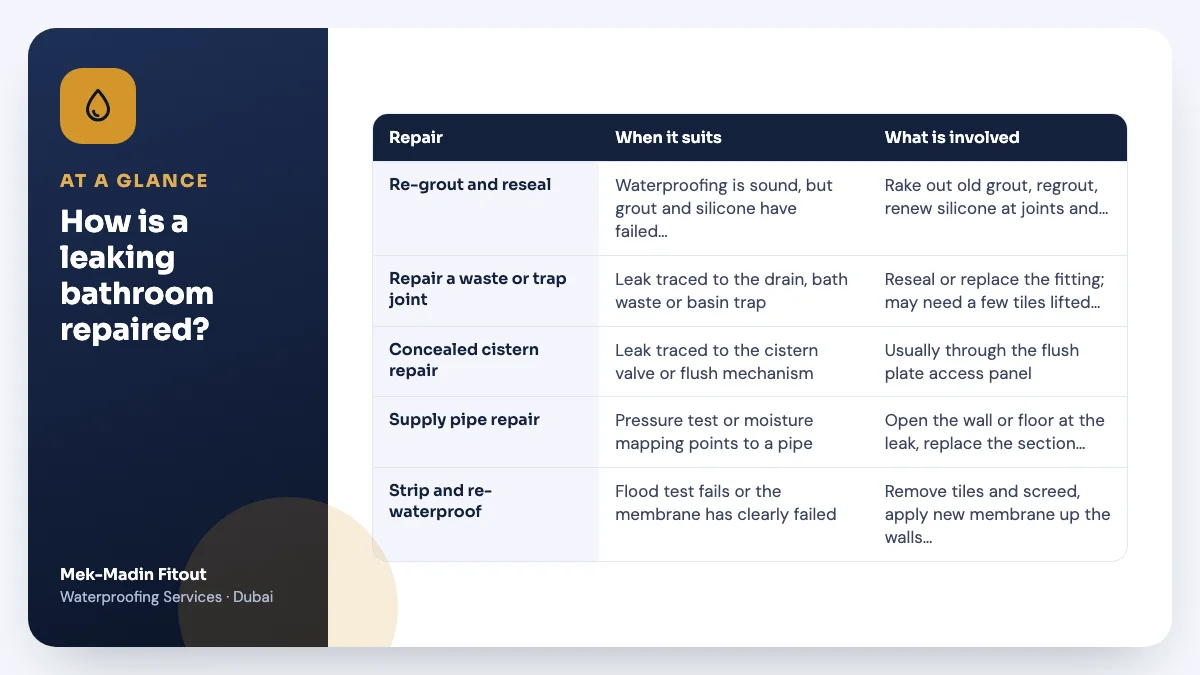
| Repair | When it suits | What is involved |
|---|---|---|
| Re-grout and reseal | Waterproofing is sound, but grout and silicone have failed around the shower | Rake out old grout, regrout, renew silicone at joints and around the tray |
| Repair a waste or trap joint | Leak traced to the drain, bath waste or basin trap | Reseal or replace the fitting; may need a few tiles lifted around the drain |
| Concealed cistern repair | Leak traced to the cistern valve or flush mechanism | Usually through the flush plate access panel |
| Supply pipe repair | Pressure test or moisture mapping points to a pipe | Open the wall or floor at the leak, replace the section, then make good |
| Strip and re-waterproof | Flood test fails or the membrane has clearly failed | Remove tiles and screed, apply new membrane up the walls, flood test, then retile |
When is re-grouting and resealing enough?
This is the least disruptive option and is worth doing when the floor itself passes a flood test. Use a grout suited to wet areas, and renew the silicone where the floor meets the walls and the tray. Our grout guide explains what a proper bathroom regrout involves. If your grout is also stained, our guide to bathroom tiles that last in a humid climate covers grout and tile choice.
When does the floor need stripping and re-waterproofing?
When the membrane under the tiles has failed, sealing the surface only delays the next leak. The floor needs stripping back, a new waterproofing system applied and carried up the walls, and careful detailing around the drain. A flood test before tiling confirms it holds water.
This is a larger job, often a few days or more, and the bathroom is out of use. Building management usually needs to know about the work and noise.
Who pays when a bathroom leaks into the flat below in Dubai?
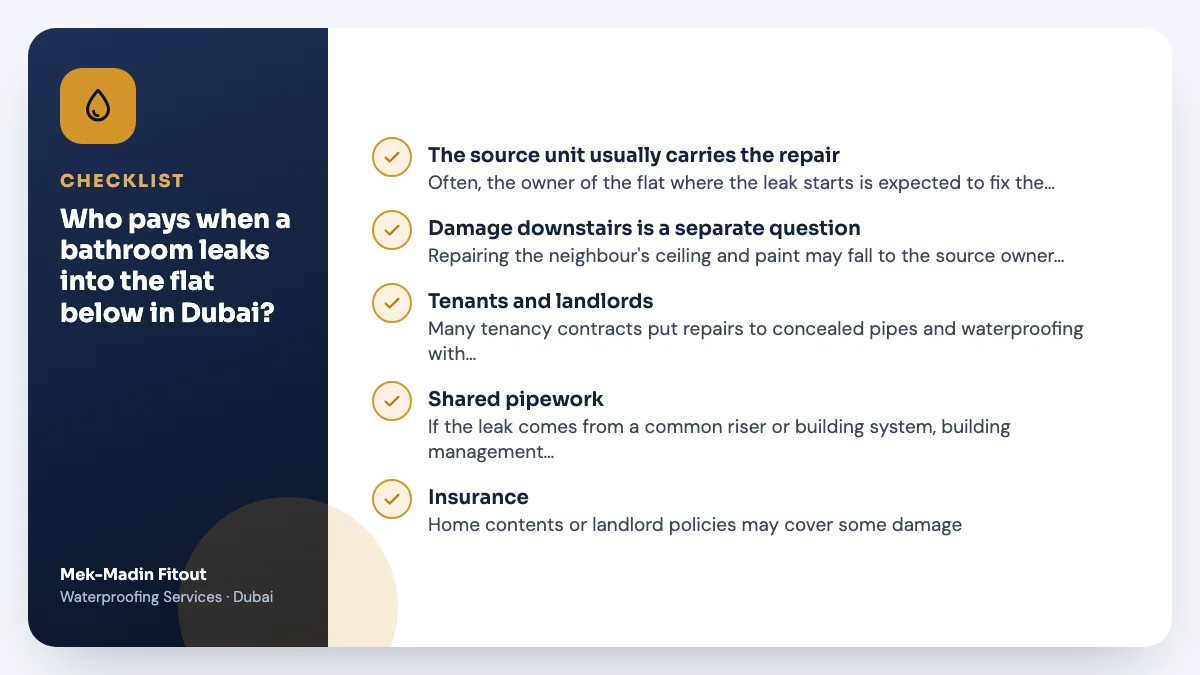
When a bathroom leaks into the flat below in Dubai, the owner of the flat where the leak starts is often expected to fix the cause, which may be the landlord rather than the tenant. Damage to the neighbour's ceiling is a separate question, and the final split depends on your tenancy contract, insurance and building rules.
This is a general guide, not legal advice. The answer depends on your tenancy contract, your insurance and your building's rules.
- The source unit usually carries the repair. Often, the owner of the flat where the leak starts is expected to fix the cause. That might be the landlord rather than the tenant.
- Damage downstairs is a separate question. Repairing the neighbour's ceiling and paint may fall to the source owner, their insurer, or be agreed between the two parties.
- Tenants and landlords. Many tenancy contracts put repairs to concealed pipes and waterproofing with the landlord, and minor upkeep such as silicone with the tenant. Damage caused by misuse may be treated differently. Check your own contract.
- Shared pipework. If the leak comes from a common riser or building system, building management or the owners' association usually handles it.
- Insurance. Home contents or landlord policies may cover some damage. Contact your insurer early and keep all photos and reports.
For rented flats, Dubai's tenancy law gives a starting point. Article 17 of Law No. (26) of 2007 regulating the relationship between landlords and tenants in Dubai makes the landlord responsible for "any defect, damage, deficiency, and wear and tear" to the property that occurs "for reasons not attributable to the fault of the Tenant". The cause of the leak still matters, so keep the tracing report.
If the parties cannot agree, building management can often help. The Dubai Land Department is the official starting point for questions about tenancy and jointly owned property.
When should you call in a leak specialist?
Call in a leak specialist if the leak keeps returning, if you cannot find an obvious cause, or if the neighbour's ceiling is sagging or wet near lights. Water near electrics downstairs is a safety risk, so the power to that area may need isolating.
We trace bathroom leaks with step-by-step tests, then carry out the repair and make good the finishes. See our wet-area and bathroom waterproofing work for what is covered, or call or WhatsApp +971 52 884 8916. We confirm a visit time when you call and can coordinate with your building management.
If the fault turns out to be a pipe, our plumbing services team handles the repair.
FAQs
Can a bathroom leak be fixed without removing the tiles?
Sometimes. If the cause is grout, silicone, a waste joint or a concealed cistern, the repair usually avoids major tile removal. If a flood test shows the membrane under the tiles has failed, the floor normally has to be stripped and re-waterproofed to fix it properly.
How long does it take to trace a bathroom leak?
A simple case, such as a leak that clearly follows shower use, can be narrowed down in one visit. Leaks that come and go, or that may involve the flat above or a shared riser, can take longer. A flood test also needs time for water to show downstairs.
Will my neighbour's ceiling dry out on its own?
Once the leak is stopped, gypsum and plaster usually dry over days or weeks, depending on how wet they were. Stains normally need a stain-blocking primer before repainting. Soft, sagging or crumbling gypsum board should be cut out and replaced.
Should I stop using the bathroom until it is repaired?
If the leak follows shower or bath use, stop using those until the cause is found. You can often keep using the basin and toilet if tests show they are not involved. If the leak is constant, keep the water to that bathroom turned off.