The best bathroom tiles for a humid climate are porcelain tiles. They absorb very little water, resist mould and staining, and handle steam and heat without cracking. Use matt or textured porcelain with a good slip rating on floors, porcelain or glazed ceramic on walls, and epoxy or high-quality grout over a proper waterproofing membrane.
Tiles are only part of the story, though. In Dubai, the grout, the waterproofing and the ventilation decide whether a bathroom stays dry and clean for years.
Why is humidity so hard on bathroom tiles in Dubai?
Humidity is hard on bathroom tiles in Dubai because constant moisture causes mould in grout and silicone joints, lets water behind tiles through cracked grout, and leaves staining from scale and soap. Summer humidity is high, especially near the coast, and many apartment bathrooms have no window, so moisture relies on the extractor fan.
A bathroom in Dubai deals with more than shower steam. Summer outdoor humidity is high, especially near the coast. Many apartment bathrooms are internal rooms with no window, so moisture has nowhere to go but the extractor fan. The UAE government's fact sheet describes a desert climate in which "during the summer, it is hot and humid".
Moisture causes three main problems:
- Mould and mildew in grout lines, silicone joints and porous surfaces.
- Water getting behind tiles through cracked grout or failed joints, which loosens tiles and damages walls and ceilings below.
- Staining and scale from hard water spots, soap and cleaning products.
A good tile choice reduces the first and third problems. Only careful installation solves the second.
Porcelain, ceramic, stone or glass: which tile suits a humid bathroom?
Porcelain suits floors, walls and showers because it absorbs very little water. Glazed ceramic works well on walls, while natural stone and glass mosaic need more care. Stone is porous and needs sealing and resealing, and glass mosaic has so many grout lines that the grout choice becomes critical.
Porcelain
Porcelain is made from fine clay fired at high temperature, which makes it dense. It absorbs very little water, so it suits floors, walls and shower areas. Full-body and through-colour porcelain hide chips better than glazed versions.
Porcelain is harder to cut and needs the right adhesive. Large slabs need a very flat wall or floor and careful fitting.
Ceramic
Glazed ceramic tiles have a more porous body under a glass-like glaze. The glaze keeps water out of the face, so ceramic works well on bathroom walls. It is lighter and easier to cut than porcelain.
On busy floors, chips through the glaze can expose the softer body. Choose porcelain for shower floors where you can.
Natural stone
Marble, travertine and limestone look beautiful but are porous. They need sealing when installed and resealing over time. Acidic cleaners, some soaps and even lemon juice can etch the surface.
Polished stone is slippery when wet. Honed or textured finishes are safer on floors.
Glass and mosaic
Glass tiles do not absorb water and suit feature walls and niches. Small mosaics have many grout lines, so the grout choice becomes critical. Glass shows water spots and soap marks clearly.
How do the tile types compare?
| Tile type | Water absorption | Upkeep in humid conditions | Best use in a bathroom |
|---|---|---|---|
| Porcelain | Very low | Low; wipe and clean grout | Floors, walls, shower areas |
| Glazed ceramic | Low at the face, higher in the body | Low on walls | Walls, light-use floors |
| Natural stone | Moderate to high, varies by stone | High; sealing and gentle cleaners | Feature walls, vanity areas, sealed floors |
| Glass mosaic | None | Moderate; grout needs care | Feature strips, niches, splashbacks |
Which tile finish is safest on a wet bathroom floor?
Matt, textured or anti-slip finishes are the safer choice for wet bathroom floors and shower trays, because glossy tiles are slippery when wet and humid bathroom floors rarely dry completely. Check the slip rating on the box or data sheet, such as an R value or pendulum test result, and keep glossy tiles for walls.
Glossy tiles look bright and clean, but they are slippery when wet and show water marks. In a humid bathroom, floors rarely dry completely, so slip resistance matters.
Manufacturers rate slip resistance using standard tests. You may see ratings such as "R" values or pendulum test results on the box or data sheet. Ask the supplier which rating suits wet bathroom floors and shower trays, and choose matt, textured or "anti-slip" finishes there.
Cement or epoxy grout: which is better for a humid bathroom?
Epoxy grout lasts far better in showers and on floors because it is much less porous. Cement grout is cheaper and easier to work with but needs sealing in wet areas. Epoxy also resists stains, mould and most cleaning chemicals, though it needs an experienced tiler to install.
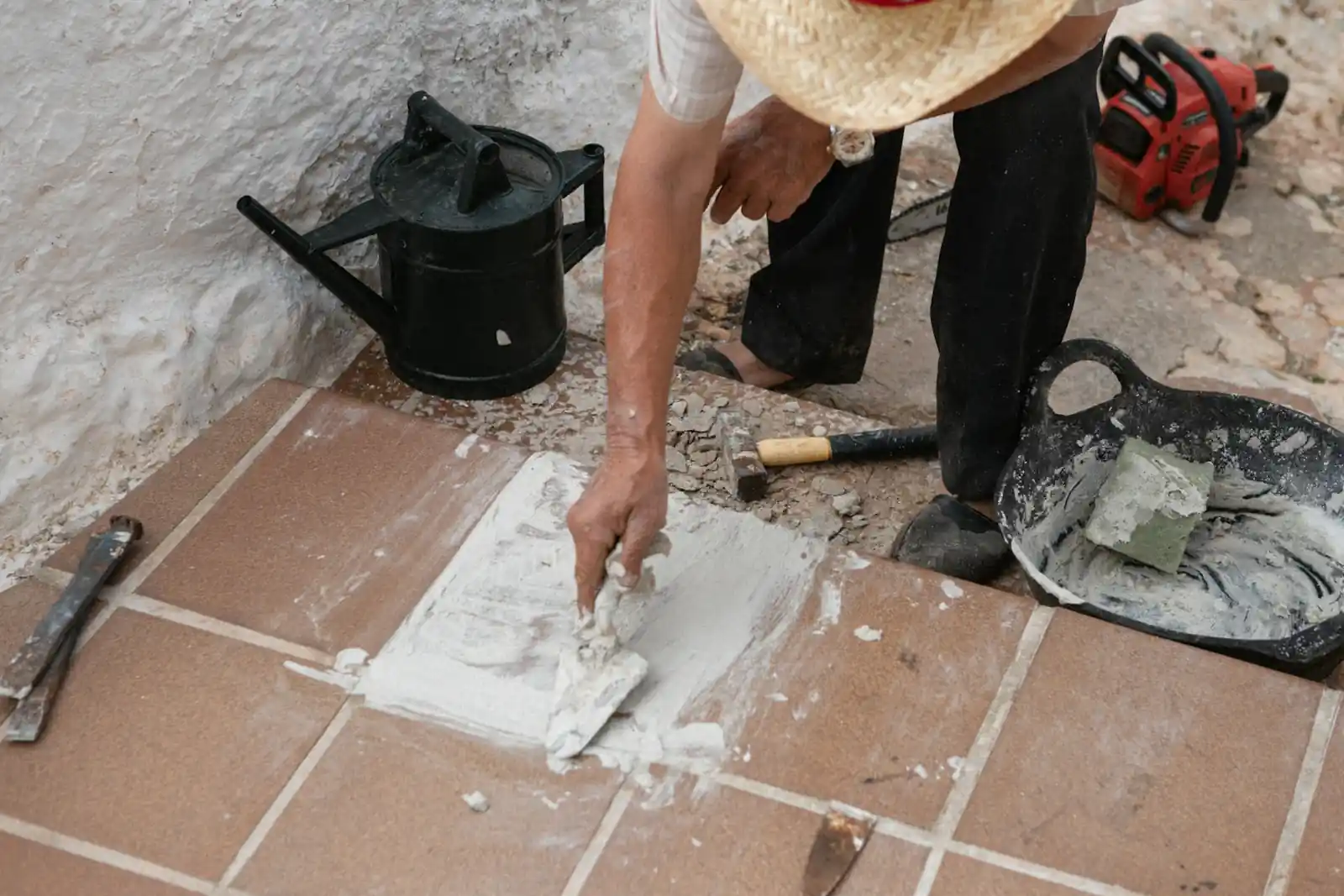
Most mould and staining starts in the grout, not the tile. Standard cement-based grout is porous. It absorbs water, discolours and can crack over time. If yours has already darkened, our guide on whether to clean or regrout black grout helps you decide.
Cement grout
Cement grout is cheaper and easy to work with. It needs sealing and occasional resealing in wet areas. Choose a mid-tone colour to hide light staining.
Epoxy grout
Epoxy grout is much less porous. It resists stains, mould and most cleaning chemicals. It is harder to install, so it needs an experienced tiler, but it lasts far better in showers and on floors.
Where should you use silicone instead of grout?
Corners, the junction with the bath or shower tray and changes of plane need flexible silicone, not grout. Use a sanitary silicone with mould inhibitor. Replace it when it blackens or peels, rather than cleaning it repeatedly.
Should you choose large or small tiles for a bathroom?
Large-format tiles suit walls and dry floor areas, while smaller tiles suit walk-in shower floors that must slope to a drain. Large tiles mean fewer grout lines but need a very flat surface, and a linear drain lets larger tiles slope in one direction for a clean look with good drainage.
Large-format tiles mean fewer grout lines and less cleaning. They need a very flat surface and suit walls and dry floor areas.
Smaller tiles follow the slope to a floor drain more easily. They are often used on walk-in shower floors, where water must run to the drain without pooling.
A linear drain lets larger tiles slope in one direction. That combines a clean look with good drainage.
Why does the waterproofing behind bathroom tiles matter most?
The waterproofing behind bathroom tiles matters most because tiles and grout are not a waterproof barrier on their own. Water eventually passes through tiny cracks in grout, and only a waterproofing membrane under the tiles keeps it away from the wall, the slab and the flat below.
In wet areas, the membrane should cover the shower floor and run up the walls, with corners and pipe penetrations reinforced. Our guide to signs your roof or terrace needs waterproofing covers how water damage tends to show up in Dubai buildings. For wet rooms, see our waterproofing services.
How do you keep bathroom tiles clean and dry day to day?
To keep bathroom tiles clean and dry day to day, run the extractor fan during and after every shower and check it actually pulls air, squeegee the glass and walls after use, clean stone and grout with pH-neutral products rather than harsh acids, and check grout and silicone every few months.
Fewer frame edges also mean fewer places for limescale and mould, one of the points in our guide to choosing a shower screen.
- Run the extractor fan during and for a while after every shower.
- Clean or replace extractor fan covers and check the fan actually pulls air.
- Squeegee glass and walls after showering to reduce water spots.
- Use pH-neutral cleaners on stone and grout; avoid harsh acids.
- Check silicone and grout every few months for cracks or black spots.
What should you look for when buying bathroom tiles?
When buying bathroom tiles for a humid climate, look for porcelain on floors and showers, porcelain or glazed ceramic on walls, a slip-rated matt or textured floor finish, epoxy or sealed grout, sanitary silicone at corners and a waterproofing membrane under all wet areas. In apartments, check building management rules first.
- Porcelain for floors and shower areas; porcelain or glazed ceramic for walls.
- Matt or textured floor finish with a slip rating suited to wet areas.
- Epoxy or high-quality sealed grout in showers.
- Sanitary silicone at corners and junctions.
- A waterproofing membrane under all wet areas.
- In apartments, check building management rules before any wet-area work.
When should you call a professional tiler?
Call a professional tiler if your bathroom tiles are cracking, grout keeps failing or you are planning a new bathroom. Retiling is more than laying tiles: it also means renewing waterproofing and setting falls to the drain, and mistakes in either can take months to show.
Retiling a bathroom means removing old tiles, checking the screed, renewing waterproofing and setting falls to the drain. Mistakes often only show months later as leaks into the flat below or loose, hollow-sounding tiles.
If your tiles are cracking, grout keeps failing or you are planning a new bathroom, our floor and tiling services cover removal, waterproofing coordination and installation. Call or WhatsApp +971 52 884 8916 to arrange a visit. We confirm a visit time when you call.
FAQs
Is porcelain better than ceramic for a bathroom?
For floors and showers, usually yes. Porcelain is denser and absorbs less water, so it handles constant moisture and wear better. Glazed ceramic is a good, lighter option for bathroom walls where foot traffic is not an issue.
Can I use marble in a humid bathroom?
Yes, but expect more upkeep. Marble is porous and needs sealing, gentle pH-neutral cleaners and periodic resealing. Choose a honed rather than polished finish on floors to reduce the risk of slipping.
Why does my grout keep turning black?
Black grout usually means mould growing in porous cement grout that stays damp. Better ventilation, regular cleaning and sealing help. In showers, replacing it with epoxy grout is often the longer-lasting fix.
Do I need waterproofing if I use porcelain tiles?
Yes. Porcelain resists water, but grout lines and joints do not stop it fully. A waterproofing membrane under the tiles protects the wall, slab and any rooms below from slow leaks.