
The clearest signs your roof needs waterproofing are damp patches or stains on top-floor ceilings, peeling or bubbling paint, water pooling after rain or AC runoff, cracked screed or tiles, white salt marks, musty smells or mould, and a membrane that is blistered or split. Any one of these is worth checking promptly.
Dubai does not see much rain, so roof problems can stay hidden for a long time. Then one heavy downpour shows them all at once. This guide explains each sign, what usually causes it and what to look at first.
Why do roofs and terraces fail in Dubai?
Most flat roofs and terraces in Dubai fail because the waterproofing layer under the tiles or screed cracks, lifts or wears through over time. That layer might be a bitumen membrane, a liquid-applied coating or a cement-based system. Strong sun, rare heavy rain, AC condensate, blown sand and roof fixings all play a part.
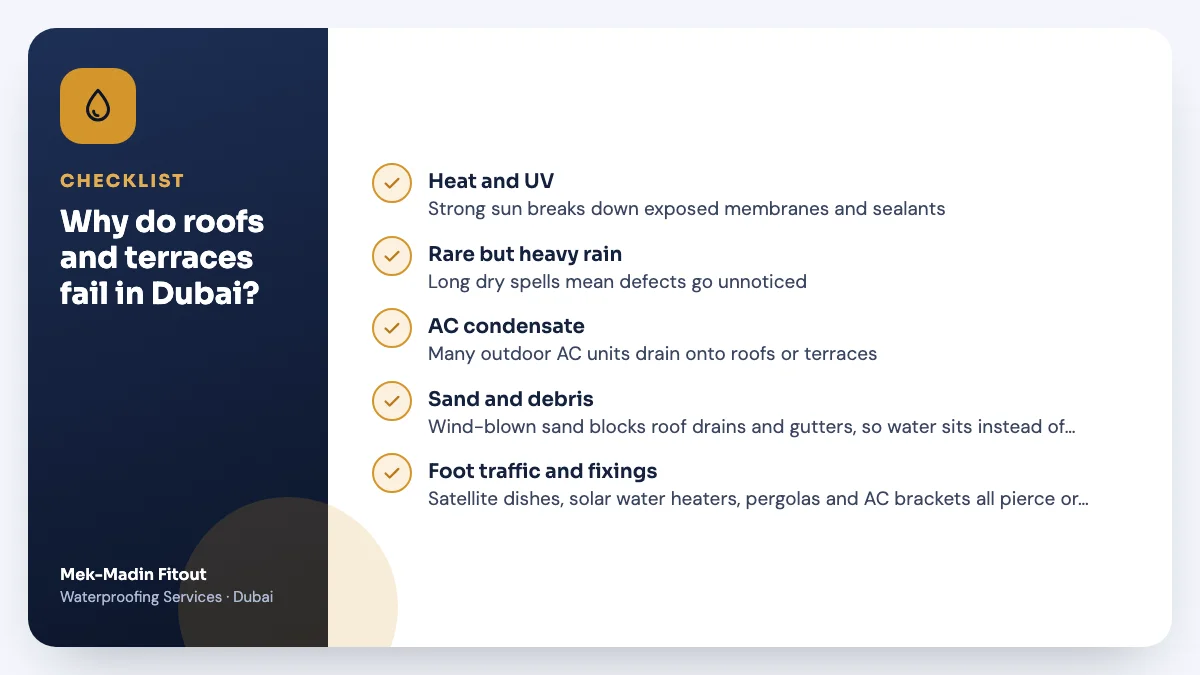
Several local conditions speed this up:
- Heat and UV. Strong sun breaks down exposed membranes and sealants. Surfaces can get very hot during the day and cool at night, so materials expand and contract.
- Rare but heavy rain. Long dry spells mean defects go unnoticed. When heavy rain comes, water finds every weak point at once.
- AC condensate. Many outdoor AC units drain onto roofs or terraces. That steady trickle can soak a weak spot all year round.
- Sand and debris. Wind-blown sand blocks roof drains and gutters, so water sits instead of draining.
- Foot traffic and fixings. Satellite dishes, solar water heaters, pergolas and AC brackets all pierce or load the roof surface.
AC condensate is also covered by Dubai's green building rules. Al Sa'fat, the Dubai Green Building System, says that "for all buildings including existing buildings", condensate water produced by air-conditioning equipment "must be collected and disposed appropriately".
How can you tell if a roof or terrace is letting water in?
A roof or terrace that is letting water in usually shows damp stains on the ceiling below, peeling or bubbling paint, standing water after rain or AC runoff, cracked screed or tiles, white salt marks, a musty smell or mould, or a blistered and split membrane. Stains that grow after rain point most clearly to the roof.
White salt marks low on ground floor walls usually have different causes, which we cover in our guide to damp walls on a villa's ground floor.
1. Damp patches or stains on the ceiling below
This is the most common sign. Look for yellow or brown rings, grey patches or a darker area on the ceiling of the top floor or the room under a terrace. Stains that grow after rain or in humid weather point to water coming from above.
Do not assume the source is directly above the stain. Water can travel along the slab before it shows.
2. Peeling, bubbling or flaking paint
Moisture trapped in plaster pushes paint away from the surface. You might see blisters, soft patches or flakes falling from ceilings and upper walls. Repainting without fixing the source only hides the problem for a short time.
3. Standing water after rain or AC runoff
A flat roof should still drain. If water sits in pools for hours after rain, or a wet patch never dries near an AC unit, the slope or drains are not working. Ponding water puts constant pressure on the waterproofing layer and finds any weakness.
4. Cracks in the screed, tiles or parapet walls
Cracked tiles, open grout lines or cracks in the screed let water reach the layer beneath. Look closely along parapet walls and where the roof meets vertical surfaces. These joints move the most and often fail first.
5. White salt marks (efflorescence)
White, powdery deposits on walls, ceilings or concrete are salts left behind as water evaporates. They show that water has been moving through the material. On a roof or terrace, they often appear near drains, upstands or along cracks.
6. Musty smell, mould or mildew
A damp, musty smell in top-floor rooms is often the first thing people notice. Black or green spots in ceiling corners or behind furniture suggest moisture has been there for a while. Mould is also a concern for health, so do not ignore it.
7. Blistered, lifted or split membrane
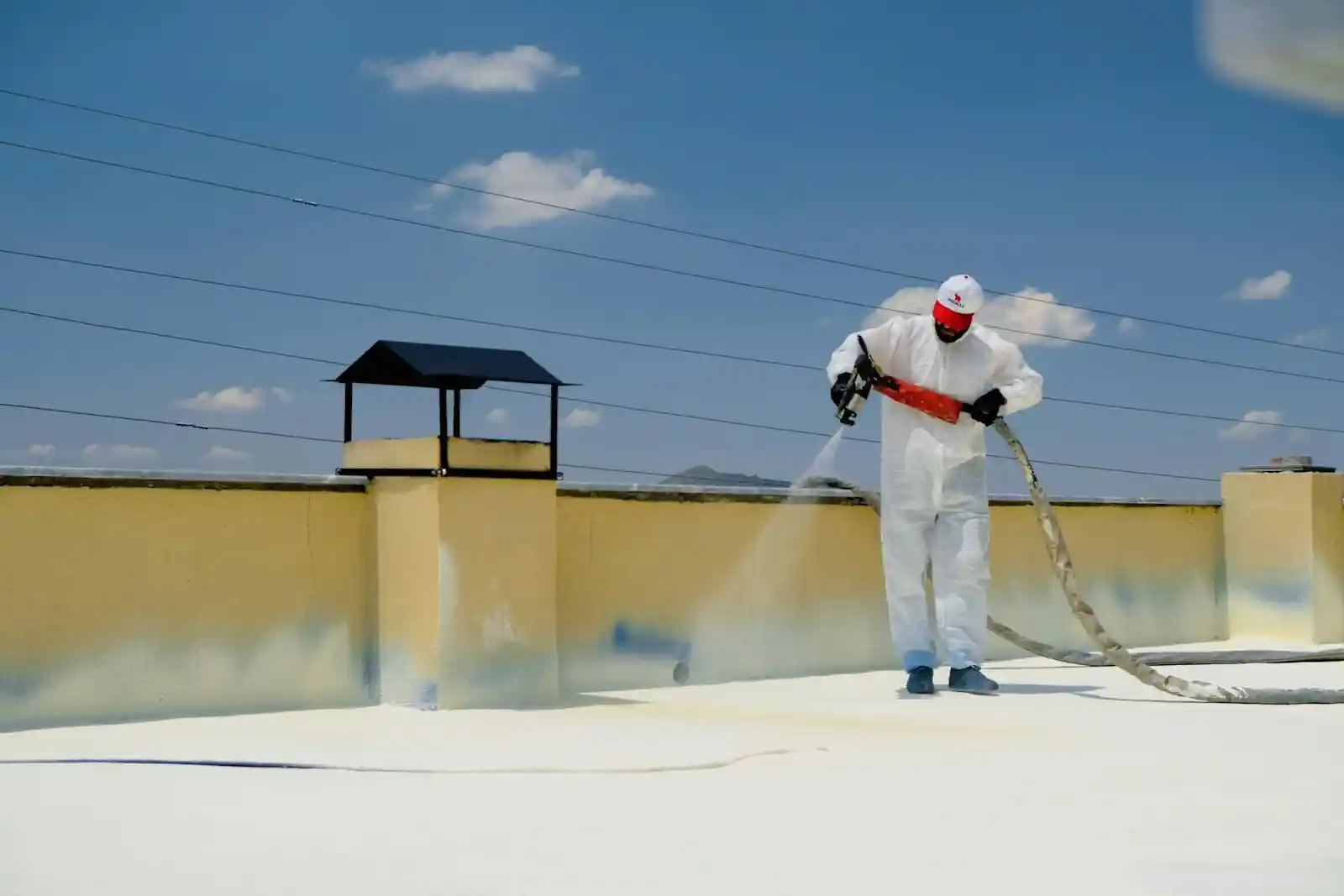
If your roof has an exposed membrane, look at it directly. Blisters, curled edges, splits and bare patches all mean the layer is no longer sealed. Check around drains, pipes and fixings, where membranes are cut and joined.
Which roof leak signs are most urgent?
A ceiling stain that grows after rain, a blistered or split membrane, and mould where people sleep are the most urgent signs. Pooling water, cracks and salt marks are usually medium urgency, and peeling or bubbling paint falls between medium and high. Use the table to judge what to check first.
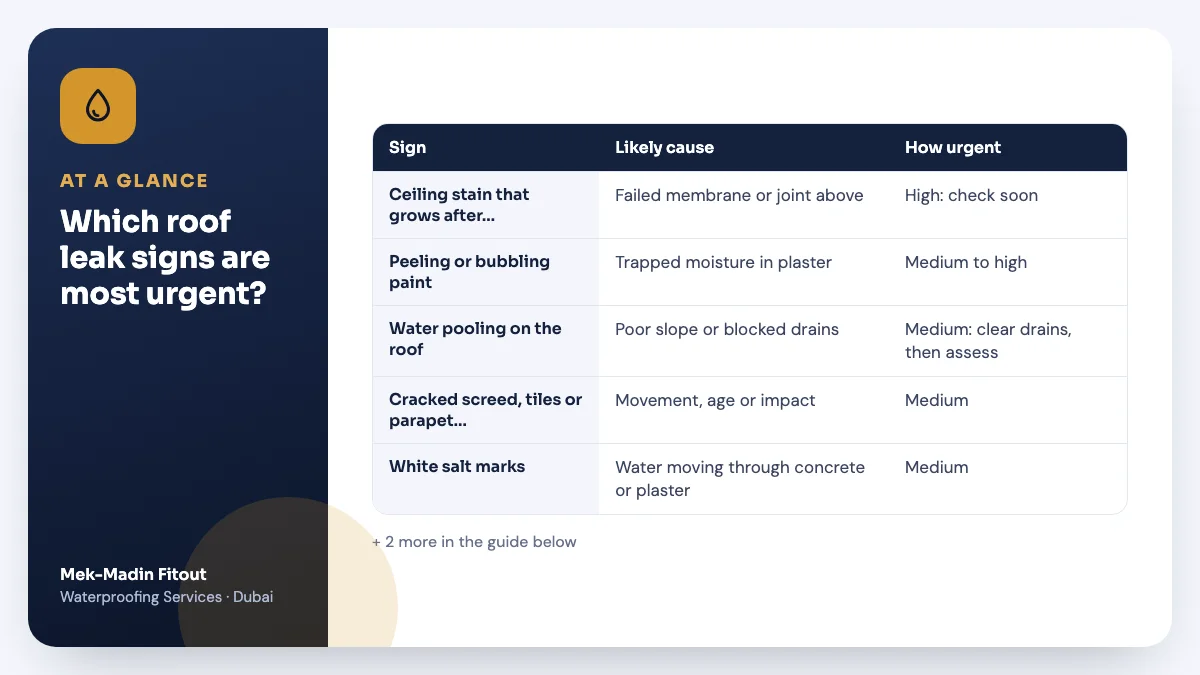
| Sign | Likely cause | How urgent |
|---|---|---|
| Ceiling stain that grows after rain | Failed membrane or joint above | High: check soon |
| Peeling or bubbling paint | Trapped moisture in plaster | Medium to high |
| Water pooling on the roof | Poor slope or blocked drains | Medium: clear drains, then assess |
| Cracked screed, tiles or parapet joints | Movement, age or impact | Medium |
| White salt marks | Water moving through concrete or plaster | Medium |
| Musty smell or mould | Ongoing damp | High where people sleep or children live |
| Blistered or split membrane | UV damage, age or poor installation | High |
What can you check yourself before calling a waterproofing company?
Before calling a waterproofing company, you can narrow down a roof leak by clearing drains, following AC drain pipes, checking penetrations such as pipes and solar heater frames, taking dated photos and watching what happens after rain. Only go onto the roof if it is safe, with secure access and edge protection.
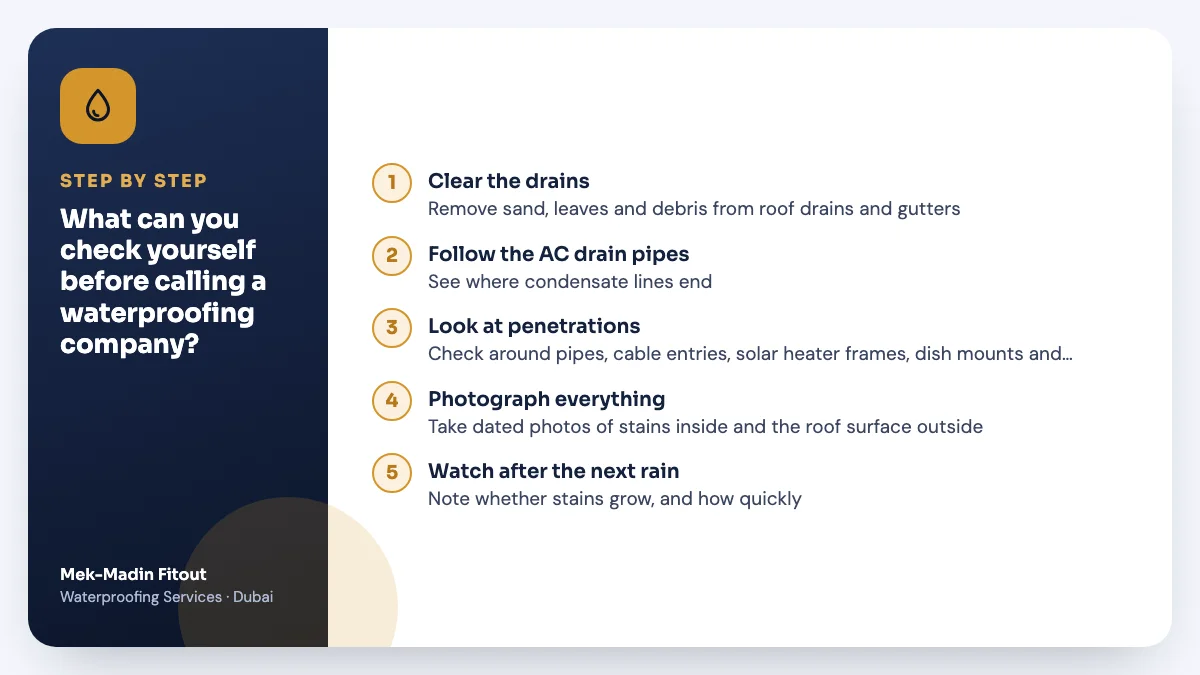
- Clear the drains. Remove sand, leaves and debris from roof drains and gutters. Pour some water in to check it flows away.
- Follow the AC drain pipes. See where condensate lines end. If they drip onto one spot, that spot may be the source.
- Look at penetrations. Check around pipes, cable entries, solar heater frames, dish mounts and pergola posts. If you are planning a new pergola, our guide to pergola permits and community approval covers fixing details.
- Photograph everything. Take dated photos of stains inside and the roof surface outside. This helps whoever carries out the repair.
- Watch after the next rain. Note whether stains grow, and how quickly.
Is a ceiling stain always a roof leak?
Not every ceiling stain is a roof leak. In apartments, water often comes from the unit above, a leaking bathroom or an overflowing AC drain. In villas, a leaking pipe in the ceiling void or a failed shower tray upstairs can look very similar.
If the stain appears regardless of the weather, plumbing or AC is a more likely cause. Rain-related stains usually point to the roof or terrace. If you are in a tower, report it to your building management, as roofs and the units above are often outside your control. Our guide to bathroom leaks into the flat below explains how those leaks are traced.
Why are older villa roofs and terraces more prone to leaks?
Older villa areas, such as parts of Jumeirah, often have roofs and terraces that have been patched several times, and each patch adds another joint that can fail. Villa owners have most control, and most responsibility, for their own roofs.
Roof terraces with tiles, planters or pergolas are harder to inspect because the waterproofing is hidden. Planters in particular keep the surface wet. Turf needs the same care, as our comparison of artificial versus real grass explains. Pool surrounds and balconies above living space need the same attention.
Should you repair a leaking roof or fully re-waterproof it?
A small, local roof defect can sometimes be repaired, for example a failed joint around a drain. If the membrane is old, brittle or failing in several places, a full re-waterproofing is usually the longer-lasting option. A proper inspection should tell you which applies before any work is priced.
Ask what system will be used, how it suits your roof and how it will be protected from sun and foot traffic. A flood test after the work is a common way to check the result.
When should you get a roof or terrace inspected?
If you see any of the seven warning signs, especially more than one, it is worth having the roof or terrace inspected. Finding the true source of a leak often needs experience, and getting it wrong means paying twice. Damp left alone can damage plaster, ceilings, electrics and furniture below.
Mek-Madin Fitout provides roof and terrace waterproofing services in Dubai, from inspections and local repairs to full re-waterproofing. Once the source is fixed, we can also make good stained ceilings with our painting and decoration service. Call or WhatsApp +971 52 884 8916 to arrange a visit.
FAQs
How long does roof waterproofing last in Dubai?
It depends on the system used, the quality of installation and how well it is protected from sun, foot traffic and standing water. Exposed membranes usually age faster than those under tiles or screed. Regular checks of drains, joints and fixings help any system last longer.
Can I just paint over a damp patch on the ceiling?
Painting over damp only hides it for a while. The moisture will usually push through again, and the source may keep causing damage you cannot see. Find and fix the cause first, let the area dry fully, then repair and repaint.
Is the best time to waterproof a roof before or after summer?
Many owners prefer the cooler months, when it is more comfortable to work outdoors and many materials are easier to apply. Getting it done before the winter rain season also makes sense. If you have an active leak, do not wait for a particular season.
Who is responsible for roof leaks in an apartment building?
In most towers, the roof and other shared areas are managed by the building's management or owners' association. Report the leak to building management with photos. If the water comes from the unit above, they can usually help contact that owner or tenant.