
For most Dubai villa walls, a good water-based acrylic or silicone-based exterior paint is the best choice. Both resist UV, let walls breathe and stay flexible in the heat. Elastomeric coatings suit cracked render, textured finishes hide uneven walls and gates need a metal primer and enamel, but preparation matters as much as the paint.
This guide compares paint types rather than brands. Most reputable makers offer each type, so knowing what your walls need is the useful part.
What does Dubai's climate do to exterior paint?
Strong UV fades colour and breaks down the paint's binder, leaving a chalky surface. Daily heat swings make render expand and contract, which opens hairline cracks. Fine dust sticks to soft finishes, sea air brings salt to coastal walls, and the occasional heavy downpour finds every gap.
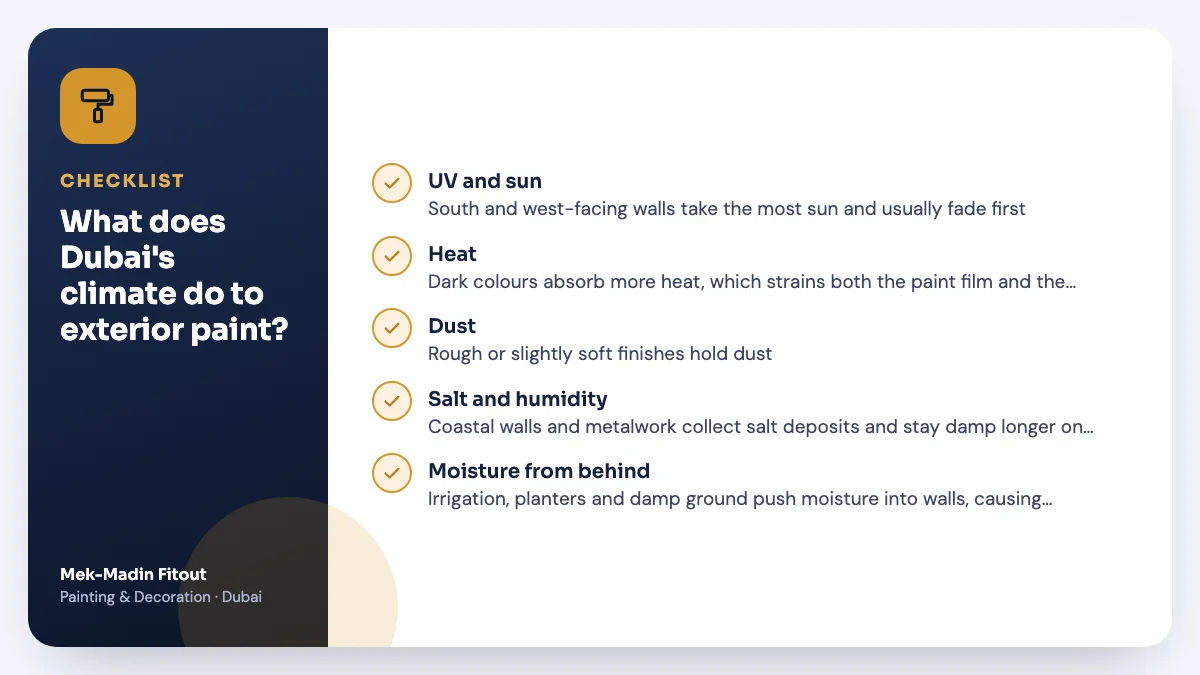
- UV and sun. South and west-facing walls take the most sun and usually fade first. Strong reds, blues and very dark shades often fade faster than off-whites and earth tones.
- Heat. Dark colours absorb more heat, which strains both the paint film and the render behind it.
- Dust. Rough or slightly soft finishes hold dust. Smooth, dirt-resistant paints rinse cleaner.
- Salt and humidity. Coastal walls and metalwork collect salt deposits and stay damp longer on humid nights.
- Moisture from behind. Irrigation, planters and damp ground push moisture into walls, causing blisters and flaking from the inside out.
Which types of exterior paint are used on Dubai villas?
The main wall paints are acrylic emulsion, silicone-based paint, elastomeric coatings, textured finishes, and cement or mineral paints, plus enamels for metal and timber. Each uses a different binder that behaves differently in sun, heat and damp. The right choice depends on the wall, its condition and what is already on it.
Acrylic exterior emulsion
This is the most common choice for rendered villa walls. A good quality 100% acrylic paint holds colour well, stays flexible as walls heat and cool, and lets water vapour escape. Cheaper blends with less acrylic binder tend to chalk and fade sooner.
Silicone-based paint
Silicone resin and silicone-modified paints shed water and dirt well while staying very breathable. They suit walls that collect dust or catch spray from sprinklers. They usually cost more and may need a matching primer from the same system.
Elastomeric coating
This is a thick, rubbery coating that stretches over hairline cracks and keeps out wind-driven rain. It suits cracked render on parapets and boundary walls. It breathes less than other wall paints, so on a damp wall it can trap moisture and blister.
Textured coatings
Sand-texture and similar finishes hide uneven render and small patch repairs. Deeper textures hold more dust and are harder to touch up neatly. Repainting a textured wall also uses more paint than a smooth one.
Cement and mineral paints
Cement-based paints are cheap and breathable but chalk sooner than acrylics. Mineral silicate paints bond into the masonry and breathe very well. Colour choice is narrower, and they need a bare mineral surface rather than old acrylic paint.
Enamels for metal and timber
Gates, railings, grilles and timber doors need a different system. That means a rust-inhibiting or wood primer, then an exterior enamel made for that surface. These paints are not meant for masonry walls.
How do exterior paint types compare in Dubai?
Acrylic is the dependable all-rounder, silicone-based paint stays cleanest and elastomeric is the choice for cracking walls. Textured coatings hide imperfections, while cement paint is a budget option that needs repainting sooner. The table sums up how each type handles the conditions a Dubai villa faces through the year.
| Paint type | UV and fading | Dust and dirt | Cracks | Breathability | Best for |
|---|---|---|---|---|---|
| Acrylic emulsion | Good with quality pigments | Fair | Small movement only | Good | Most rendered villa walls |
| Silicone-based | Very good | Very good, sheds dirt | Small movement only | Very good | Dusty or sprinkler-splashed walls |
| Elastomeric | Good | Fair, can hold dirt | Bridges hairline cracks | Low | Cracked parapets and boundary walls |
| Textured coating | Good | Holds dust in the texture | Hides small repairs | Varies by product | Uneven or patched render |
| Cement-based | Fair, chalks sooner | Fair | Poor | Good | Budget repaints on bare masonry |
| Mineral silicate | Very good | Good | Poor | Very good | Bare mineral render that must breathe |
| Enamel on metal or timber | Good, gloss dulls in sun | Fair | Not for walls | Not for walls | Gates, railings and doors |
Does the colour of exterior paint matter in Dubai?
Yes. Lighter colours reflect more sunlight, so walls stay cooler and the paint film is under less strain, and off-whites, sand and stone shades also hide dust better than very dark or very bright colours. In most master-planned communities, the colour must also come from an approved palette.
Most villa communities control exterior colours. Check with your community management or master developer before you buy, and ask whether a written approval or NOC is needed. Our guide to villa renovation permits in Dubai explains how approvals usually work.
Why does exterior paint fail early on Dubai villas?
Most early failures come from the wall, not the paint. Damp coming through from planters or irrigation, salts pushing out of new or wet render, chalky old paint left unprimed and painting in full summer sun all cause peeling, blistering and patchy colour, whichever paint you choose.
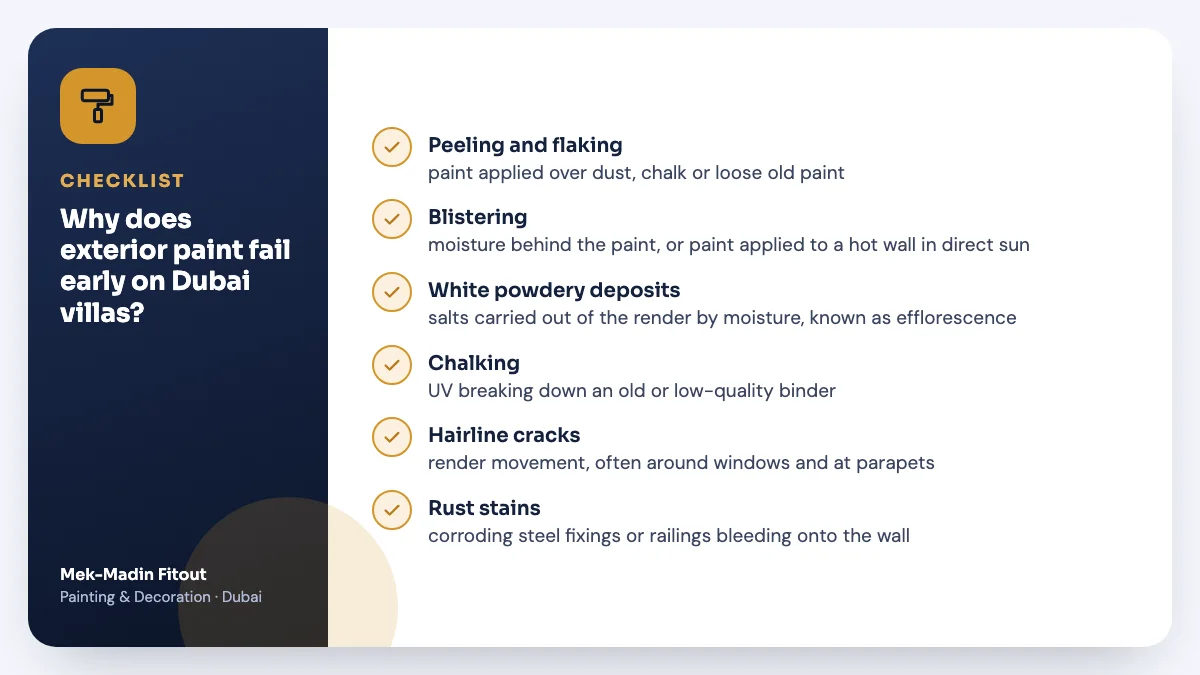
- Peeling and flaking: paint applied over dust, chalk or loose old paint.
- Blistering: moisture behind the paint, or paint applied to a hot wall in direct sun.
- White powdery deposits: salts carried out of the render by moisture, known as efflorescence.
- Chalking: UV breaking down an old or low-quality binder.
- Hairline cracks: render movement, often around windows and at parapets.
- Rust stains: corroding steel fixings or railings bleeding onto the wall.
If the paint fails near the top of the house, look at the roof and parapets too. Our list of signs a roof or terrace needs waterproofing covers the symptoms that often show on upper walls.
How should a villa exterior be prepared before painting?
Good preparation means washing off dust and salt, scraping loose paint, repairing cracks and damp, then applying the right primer for each surface. New render needs time to cure and an alkali-resistant primer. Chalky walls need a stabilising primer so the new paint can grip properly.
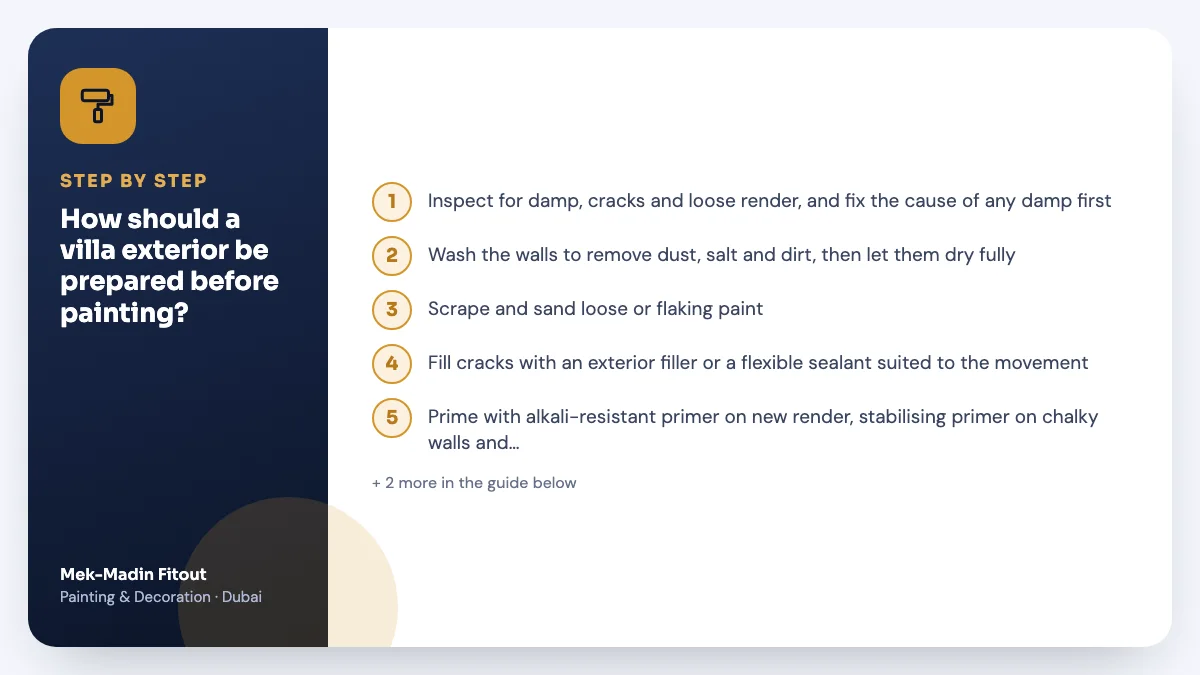
- Inspect for damp, cracks and loose render, and fix the cause of any damp first.
- Wash the walls to remove dust, salt and dirt, then let them dry fully.
- Scrape and sand loose or flaking paint.
- Fill cracks with an exterior filler or a flexible sealant suited to the movement.
- Prime with alkali-resistant primer on new render, stabilising primer on chalky walls and rust-inhibiting primer on metal.
- Apply the number of finish coats the maker recommends, which is usually two.
- Protect windows, lights, plants and paving before work starts.
The same rule applies indoors. Our guide on how often to repaint an apartment explains why preparation matters more than the paint itself.
Switch off power at the distribution board before masking or working around outdoor lights and sockets. If a fitting is damaged or wet, leave it alone and call an electrician. If you are unsure which system your walls need, our interior and exterior painting team can inspect them first.
When is the best time to paint a villa exterior in Dubai?
The cooler months are the most comfortable and usually give the best results. In summer, walls in direct sun get too hot, so paint dries before it can level and bond. If work must happen in summer, paint each wall while it is in shade and avoid the hottest part of the day.
Check the maker's surface temperature and humidity limits on the product data sheet. Avoid painting before forecast rain, dust storms or very humid nights, and switch off any sprinklers that can reach the wall.
Working at height needs care. Use stable access equipment for parapets and upper floors, and never lean a ladder against gutters, pipes or light fittings.
When should you call a professional painter?
Call a professional when walls are damp, cracked or flaking over large areas, when parapets and upper walls need scaffolding or tower access, or when the community needs approved colours and an NOC. A professional can also tell you whether the problem is really the paint or the wall behind it.
For older villas in areas such as Jumeirah, we often find patched render and several layers of old paint, so we check the surface before recommending a system.
Our villa exterior painting service covers washing, repairs, priming and finish coats for villa walls, boundary walls, gates and railings across Dubai. Call or WhatsApp +971 52 884 8916, and we will confirm a visit time when you call.
FAQs
What finish is best for exterior walls in Dubai?
A matt or low-sheen finish hides surface flaws and suits most render. Smoother satin finishes rinse cleaner but show every bump. Gloss is usually kept for metalwork and doors.
Can I paint over efflorescence?
No. The salts will push through and lift the new paint. Brush off the deposits, find and fix the moisture source, let the wall dry, then prime and paint.
Does elastomeric paint waterproof a wall?
It resists rain and bridges hairline cracks, but it does not replace proper waterproofing on roofs, terraces or walls in contact with damp ground. On a wall that is already damp, it can trap moisture.
Do I need an NOC to repaint my villa exterior?
In many communities, yes, especially if you change the colour. Rules differ between communities, so check with your community management or master developer before work starts.