


Double glazing is usually worth it in Dubai when you have large sun-facing windows, old single-glazed frames, or a noisy location, and you plan to stay. It cuts heat coming through the glass, eases the load on your AC and keeps out noise and dust. Where frames are sound, new seals or solar film may be enough.
The right answer depends on your windows, your building and what problem you are trying to solve. This guide walks through each one.
How does double glazing work?
A double-glazed unit is two panes of glass held apart by a spacer and sealed around the edge. The gap is filled with dry air or an inert gas such as argon. That sealed gap slows heat moving through the glass.
On its own, a second pane mainly reduces conducted heat. In Dubai, most heat arrives as direct sunlight. That is why the glass coating matters as much as the number of panes.
What problems can double glazing solve in a Dubai home?
Double glazing can solve four common problems in Dubai homes: heat gain through sun-facing glass that makes the AC work harder, outside noise from roads, building sites and aircraft, fine dust and sand getting in through worn seals, and condensation forming on single glazing chilled by the AC.
How does double glazing cut heat gain and AC load?
Strong sun on a west or south-facing window heats the glass and the room behind it. Your AC then runs longer to remove that heat. A double-glazed unit with a solar control or low-E coating reflects much of the sun's heat before it reaches the room.
The result is a room that holds its temperature better and an AC that cycles less. How much difference you notice depends on the window size, orientation, shading and the glass you choose. Dubai's green building rules set limits for new buildings. Under Al Sa'fat, the Dubai Green Building System, new air-conditioned buildings with a window to external wall ratio of less than 40% need glazing with a summer U-value of "2.1 (max)" W/m2K and a shading coefficient of "0.4 (max)" at the Silver Sa'fa level.
Keeping the AC itself in good order matters too, as our guide on how often to service your AC in Dubai explains.
Does double glazing block outside noise?
Traffic on main roads, construction sites and aircraft all reach homes through the glass and the gaps around it. Double glazing helps, but not all units are equal for sound.
Laminated glass with an acoustic interlayer, and panes of different thickness, block more noise than two identical panes. Homes near flight paths, such as Al Garhoud next to the airport, often notice the biggest change.
Does double glazing keep out dust and sand?
Fine dust gets in through worn gaskets and loose sashes, not through the glass. New double-glazed windows come with fresh seals and tighter frames, which is why many owners notice less dust afterwards. The same effect can sometimes be had by renewing seals on existing frames. DEWA's tips for managing electricity and water use also recommend that you "apply weather stripping and caulking around all doors and windows to keep cool air inside your home".
Does double glazing stop condensation?
In humid weather, single glazing chilled by the AC can collect condensation on its outer face. A double-glazed unit keeps the outer pane closer to outside temperature, so this happens less.
Mist between the panes is different. It means the unit's edge seal has failed, and the glass unit needs replacing.
Which glass type suits which window?
Low-E or solar control glass suits sun-facing windows, laminated glass suits noise reduction and safety, and tempered glass suits doors, low-level glass and large panels. Tinted glass cuts glare where a darker look is acceptable, while reflective glass is mainly used on offices and may be restricted by community or building rules.
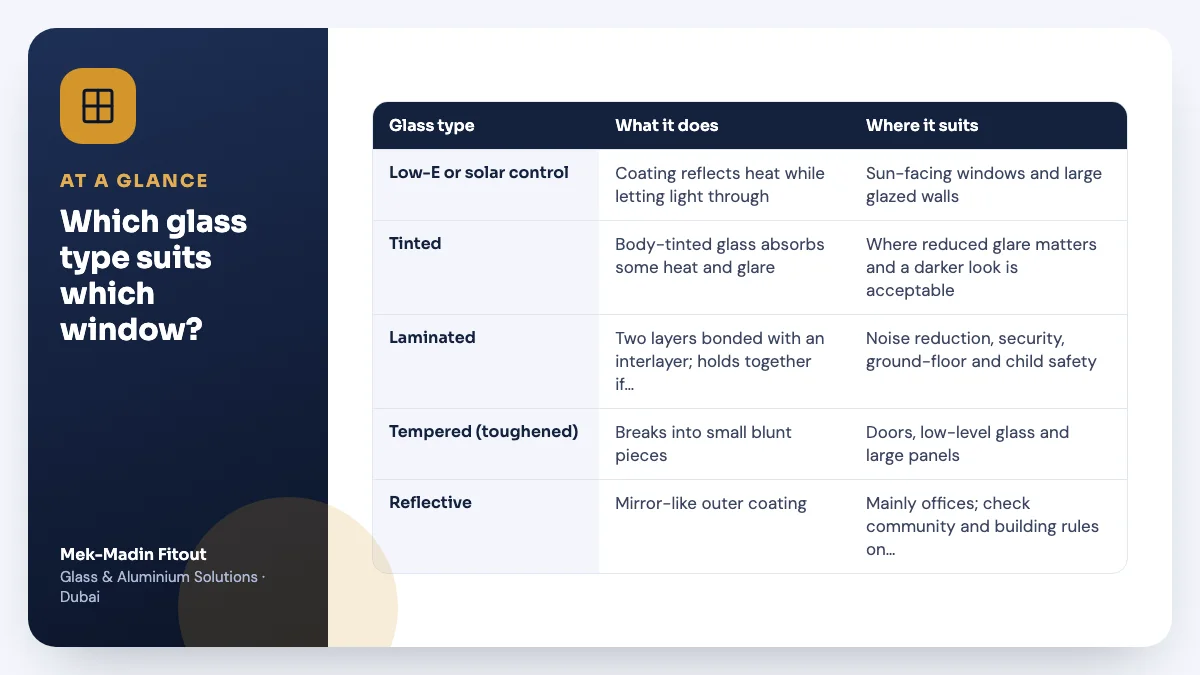
| Glass type | What it does | Where it suits |
|---|---|---|
| Low-E or solar control | Coating reflects heat while letting light through | Sun-facing windows and large glazed walls |
| Tinted | Body-tinted glass absorbs some heat and glare | Where reduced glare matters and a darker look is acceptable |
| Laminated | Two layers bonded with an interlayer; holds together if broken | Noise reduction, security, ground-floor and child safety |
| Tempered (toughened) | Breaks into small blunt pieces | Doors, low-level glass and large panels |
| Reflective | Mirror-like outer coating | Mainly offices; check community and building rules on appearance |
A single unit often combines these. For example, an outer pane with a solar control coating and an inner laminated pane for noise and safety.
Should you choose aluminium or uPVC window frames?
Thermally broken aluminium is strong and slim and handles large sliding doors well, while uPVC insulates well and seals tightly but is usually bulkier. Standard aluminium without a thermal break lets a hot frame warm the room, and uPVC in strong sun should be a UV-stabilised grade made for hot climates.
Aluminium with a thermal break
Standard aluminium conducts heat very well, so a hot frame warms the room. A thermal break is an insulating strip set into the frame that separates the outer and inner sections. It reduces heat moving through the frame and is the usual choice for new aluminium double glazing.
Aluminium is strong and slim, handles large sliding doors well and resists UV. Near the coast, ask about the coating and the quality of fixings.
uPVC
uPVC frames insulate well by nature and seal tightly. In strong sun, choose a UV-stabilised product designed for hot climates. Large openings need internal reinforcement, and frames are usually bulkier than aluminium.
Colour choice can be limited, which may matter if your community controls the look of windows.
Are sliding or hinged windows better for dust and noise?
Sliding windows and doors are popular in Dubai, but their brushes and tracks seal less tightly. Casement and tilt-and-turn windows press against their gaskets when closed. If dust and noise are the main problem, hinged openings usually perform better. Worn tracks and rollers can also stop them closing, as our guide to sliding doors that won't close explains.
Are there cheaper alternatives to double glazing?
Cheaper alternatives to double glazing include new gaskets and brushes, solar control window film, secondary glazing on the inside and replacement glass units in existing frames. Each helps with part of the problem: seals mainly with dust, film mainly with heat, and secondary glazing mainly with noise and dust.
Not every problem needs new windows. The table compares the common options.
| Option | Heat | Noise | Dust | Disruption | Approval needed? |
|---|---|---|---|---|---|
| New gaskets, brushes and adjustment | Small help | Small help | Good help | Low | Rarely |
| Solar control window film | Good help | No help | No help | Low | Sometimes, check rules |
| Secondary glazing (inner window) | Some help | Good help | Good help | Moderate | Rarely, as it is inside |
| Replace glass units in existing frames | Good help | Some help | No help | Moderate | Sometimes |
| New double-glazed windows (thermal break or uPVC) | Good help | Good help | Good help | High | Usually |
Some window films are not suited to every double-glazed unit, because they can raise the glass temperature. Check with the film or glass supplier first.
When does double glazing make most sense?
Double glazing makes most sense for sun-facing rooms that overheat, old, corroded or warped frames, noisy locations near main roads, building sites or flight paths, and owners who plan to stay for several years or are already renovating, so the disruption is shared with other work.
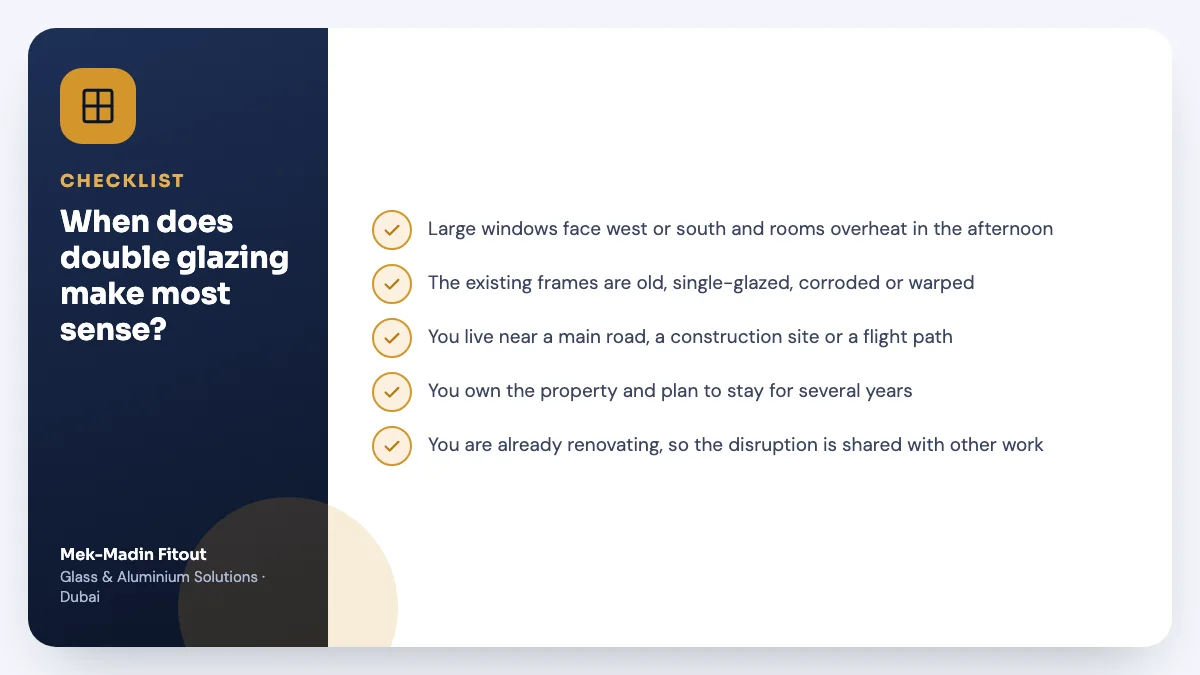
- Large windows face west or south and rooms overheat in the afternoon.
- The existing frames are old, single-glazed, corroded or warped.
- You live near a main road, a construction site or a flight path.
- You own the property and plan to stay for several years.
- You are already renovating, so the disruption is shared with other work. Our renovation services can plan glazing alongside other works.
When are new seals or window film enough?
New seals or window film are often enough when the frames are sound and close properly and the main complaint is dust, a whistling window or heat at one or two windows. They also suit tenants whose landlord will not approve new windows, and buildings that do not allow façade changes.
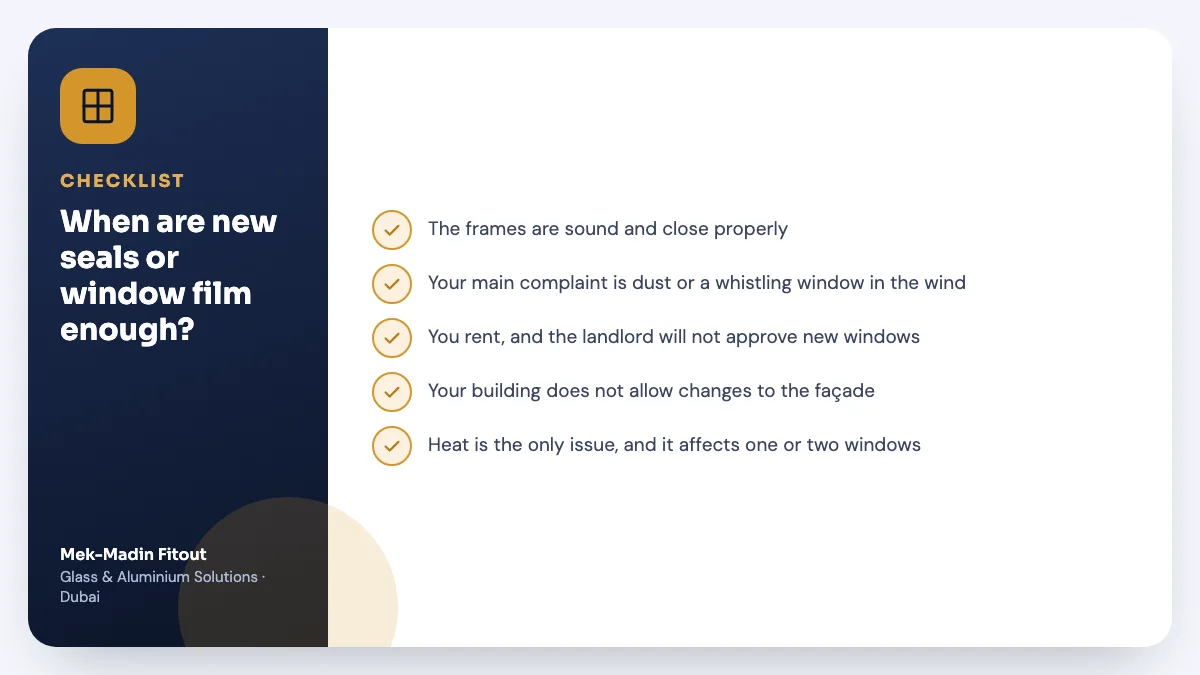
- The frames are sound and close properly.
- Your main complaint is dust or a whistling window in the wind.
- You rent, and the landlord will not approve new windows.
- Your building does not allow changes to the façade.
- Heat is the only issue, and it affects one or two windows.
Do you need approval to replace windows in Dubai?
Replacing windows in Dubai often needs approval, because windows form part of a building's external appearance. In apartment towers, the façade is usually controlled by building management or the owners' association, so replacing external windows may need written approval and is sometimes not allowed at all. Check before getting quotes.
The same façade rules apply to balconies, as our guide on whether you can enclose a balcony in Dubai explains.
In villa communities, master developers and community management often control frame colours, profiles and glass tints. Check with your community management, and ask whether a written NOC is needed before ordering. Tenants also need the landlord's written consent.
Why does professional fitting matter for double glazing?
Getting double glazing right depends on accurate measuring, the right glass build-up for each window and careful sealing to the wall. A badly fitted unit can leak air, dust and rainwater, whatever the glass. It also helps to have someone check whether your existing frames can be repaired instead.
Our team handles glass and aluminium windows, doors and repairs across Dubai, from new seals and rollers to replacement glass units and full window replacement. Call or WhatsApp +971 52 884 8916 to arrange a site visit.
FAQs
Does double glazing make a big difference to AC bills?
It can reduce heat gain through windows, which lowers the load on the AC. The effect on your DEWA bill depends on the glass coating, window size, orientation and how you use the AC. Sun-facing rooms with large windows usually benefit most.
Can I add double glazing to my apartment?
Sometimes, but external windows form part of the façade, so you need building management approval and some towers do not allow changes. Secondary glazing on the inside is often easier to approve. Ask your building management before getting quotes.
Is uPVC or aluminium better in Dubai?
Both work when properly specified: thermally broken aluminium suits large openings and slim frames and handles UV well. uPVC insulates well and seals tightly, but choose a UV-stabilised grade made for hot climates. Community rules on appearance may decide it for you.
Why is there fog inside my double-glazed window?
Fog between the panes means the edge seal has failed and moist air has got in. It cannot be wiped away. The usual fix is replacing the sealed glass unit, keeping the frame if it is in good condition.