
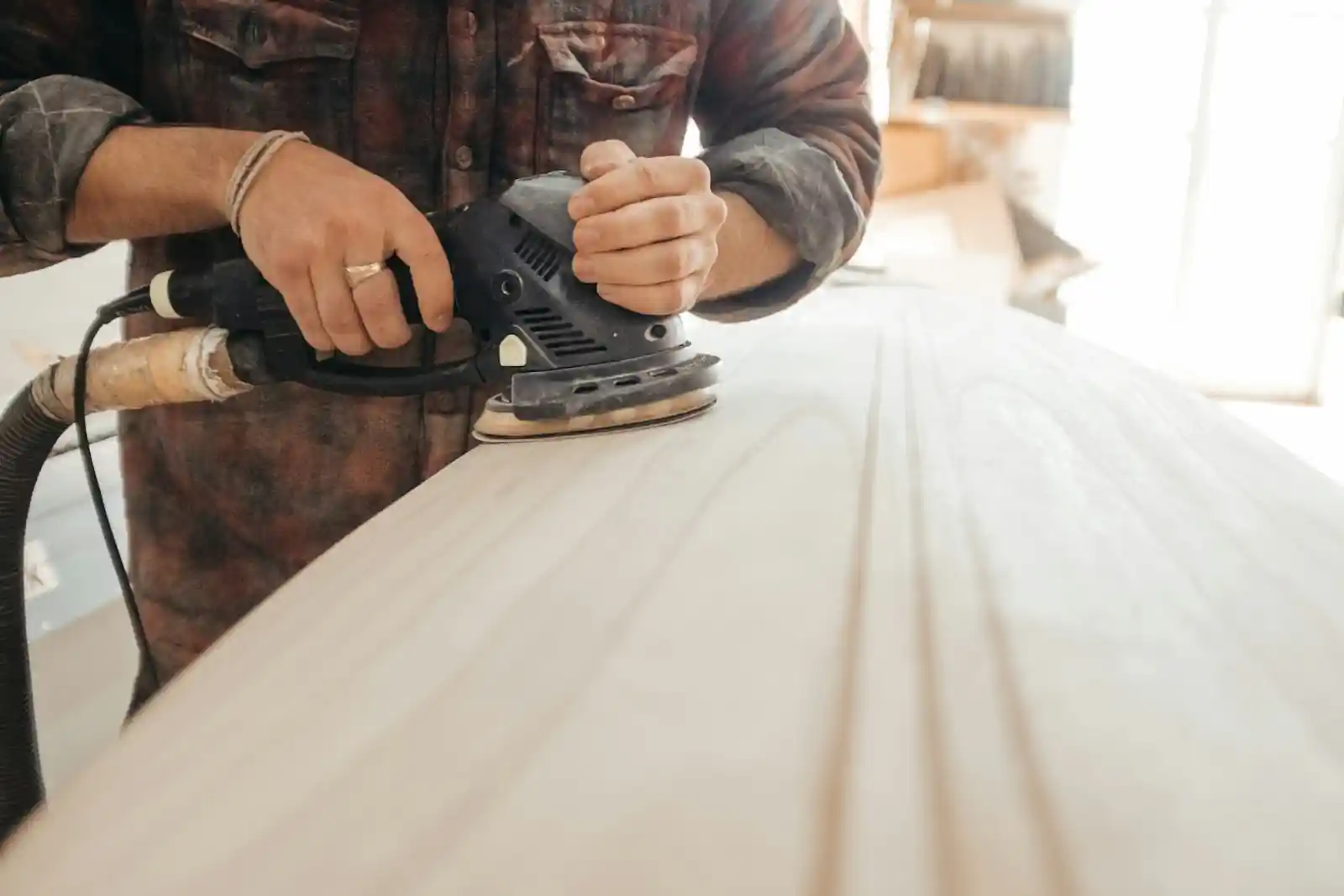

Kitchen cabinets and wardrobes swell when water gets into MDF or chipboard through a cut edge or hinge hole. The usual sources are sink or dishwasher leaks, AC condensation, mopping water and damp external walls. Swollen board rarely shrinks back, so fixing swollen cabinets usually means finding the leak first, then replacing the damaged panel.
Repairing the board without fixing the source is the most common mistake, because the new panel soon swells too. This guide explains why boards swell, how to trace the water and which repair suits which kind of damage.
Why do MDF and chipboard cabinets swell?
MDF and chipboard cabinets swell when water soaks in through cut edges, drilled holes or lifted edge banding, so the wood fibres expand and the glue bond weakens. The laminate or melamine faces resist water well, but once the raw board puffs up, drying it out does not reverse the damage.
Solid timber doors behave differently, swelling and shrinking with the seasons, and our guide to a wooden door sticking in summer shows how to ease one without planing off too much.
Most kitchen cabinets and fitted wardrobes in Dubai homes are made from MDF or chipboard (particle board), which are wood fibres or chips pressed together with glue. The faces are covered with laminate, melamine or paint, which resist water well.
The weak points are the edges and holes. Raw board is exposed wherever it is cut, drilled or where the edge banding has lifted. Water soaks in there, the fibres expand and the glue bond weakens.
Once that happens, the board puffs up, goes soft and loses its strength. Drying it out does not reverse it. Screws pull out, hinges loosen and edge banding peels away.
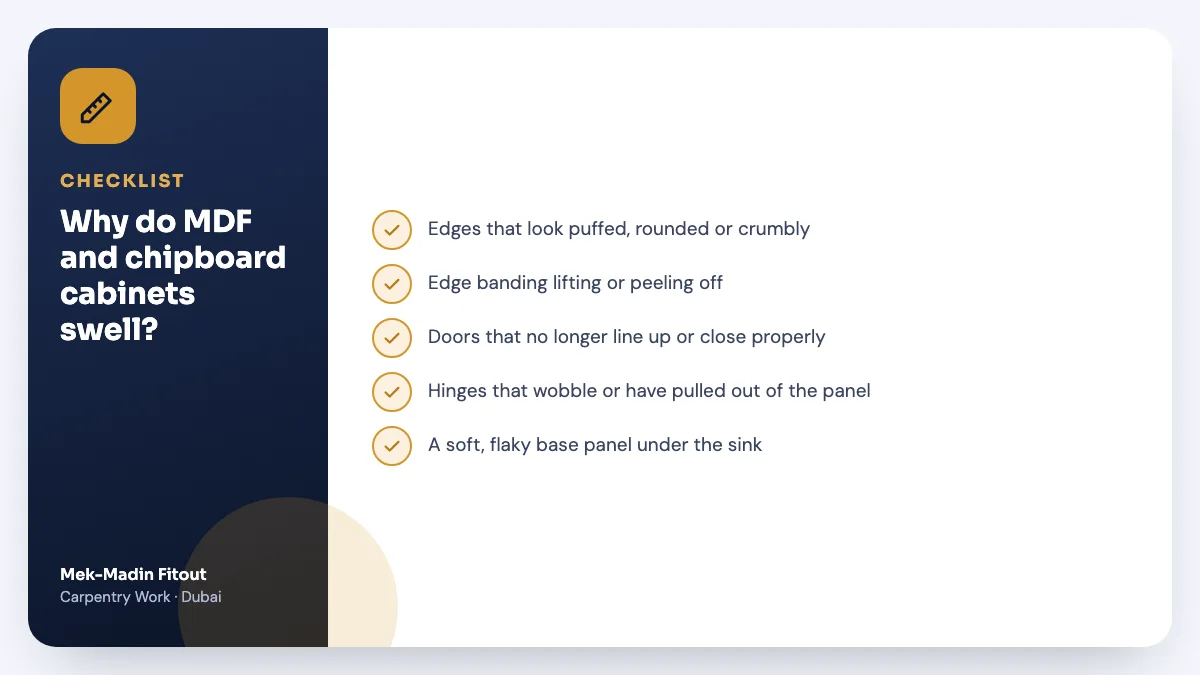
What are the signs of swollen cabinet board?
- Edges that look puffed, rounded or crumbly
- Edge banding lifting or peeling off
- Doors that no longer line up or close properly
- Hinges that wobble or have pulled out of the panel
- A soft, flaky base panel under the sink
Where does the water in swollen cabinets come from?
The water that swells cabinets usually comes from sink and dishwasher leaks, AC condensation, humidity and mopping water, or condensation on external walls behind wardrobes. The location of the damage is usually the best clue to its cause. Use this table to narrow it down.
| Where the swelling is | Likely source | First thing to check |
|---|---|---|
| Base of the sink cabinet | Slow drip from the trap, waste or tap connections | Dry the area and run the tap, then look for drips |
| Panel next to the dishwasher | Dishwasher hose, door seal or steam on opening | Hose connections and the door seal |
| Side of a unit near the washing machine | Inlet or outlet hose leak | Hose ends and the drain connection |
| Plinths and the bottom of doors | Mopping water, spills or a floor leak | How the floor is cleaned and any water under units |
| Top of wall units or a ceiling-height wardrobe | AC condensation or a leaking drain line | The AC unit and drain line above |
| Back panel of a wardrobe | Condensation on an external wall | The wall behind for damp or mould |
| Wardrobe base in a bathroom-adjacent room | Leak from a shower or bath next door | The shared wall and floor for damp |
Sink and dishwasher leaks
Slow leaks under the sink are the most common cause of swollen kitchen cabinets. A loose trap, a worn tap connector or a failing seal can drip for months before anyone notices. Dishwashers can also leak from the inlet hose or release steam onto the panel next to them every time the door opens.
AC condensation
Fan coil units and split units produce water as they cool. If the drain line is blocked or the drip tray overflows, water can run onto joinery below. Our guide on how often to service your AC in Dubai explains how regular cleaning helps keep drain lines clear.
Humidity and mopping water
Humidity alone rarely ruins sealed boards, but it speeds up damage where edges are open, especially when the AC is off for weeks during a summer trip. Mopping water splashed against plinths and the bottom of tall units is a slow but steady cause of swelling.
Wardrobes on external walls
A wardrobe placed tight against an external wall can trap air behind it. Condensation forms on the wall, and the back panel and base absorb it. The damage is often only found when the wardrobe is emptied or moved. Our comparison of fitted and freestanding wardrobes covers board choice and air gaps for these walls.
How do you find the source of a cabinet leak?
To find the source of a cabinet leak, empty and dry the unit, then test the likely source by running the tap, dishwasher or AC above. Wrap dry tissue around pipe joints and hose ends to spot damp, and look behind and below the unit if it can be pulled out.
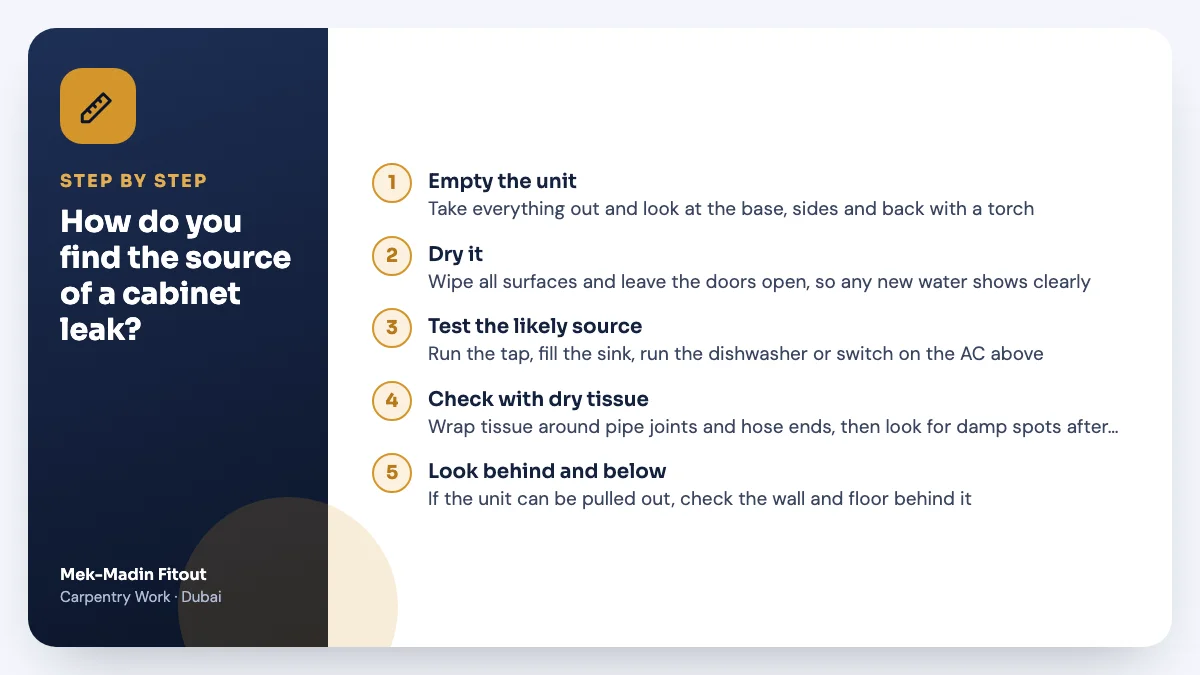
Before any repair, confirm the cause. A simple check usually does it:
- Empty the unit. Take everything out and look at the base, sides and back with a torch.
- Dry it. Wipe all surfaces and leave the doors open, so any new water shows clearly.
- Test the likely source. Run the tap, fill the sink, run the dishwasher or switch on the AC above.
- Check with dry tissue. Wrap tissue around pipe joints and hose ends, then look for damp spots after a few minutes.
- Look behind and below. If the unit can be pulled out, check the wall and floor behind it.
If the leak is from a pipe, waste or appliance hose, a plumber should fix it first. Our plumbing services cover sink, dishwasher and washing machine connections. If water is coming from an AC unit, have the drain line and tray checked by an AC technician.
Article (16) of Law No. (26) of 2007, as published in the Dubai Land Department's real estate legislation, makes the landlord responsible for "repairing any defect or damage that may affect the Tenant's intended use of the Real Property", unless the parties agree otherwise.
How do you repair swollen kitchen cabinets and wardrobes?
Once the source is fixed and the area is dry, the right repair for swollen cabinets depends on how much of the unit is affected. Swollen doors, panels, plinths and sink bases can usually be replaced, while very minor damage can be sealed.
Can you replace just one swollen door or side panel?
A single swollen door or end panel can usually be replaced. The new piece is cut to size, edged and drilled for hinges. Matching an older finish is not always possible, so some owners replace all doors in a run.
Replace plinths and kick boards
Plinths take the most water from mopping and spills. They are usually simple to replace, and can be swapped for a more water-resistant material such as PVC or aluminium-faced plinths.
Can a swollen sink base be replaced on its own?
The base panel under a kitchen sink is the part most often damaged. It can usually be cut out and replaced without removing the whole cabinet. Using a moisture-resistant board here, with sealed edges, makes a real difference.
Seal exposed edges
Where swelling is very minor or has not started, raw edges and hinge holes can be sealed. Edge banding can be reglued or replaced. Silicone along the joint between the sink base and the back wall helps keep water out.
Why do cabinet doors come loose, and can hinges be refixed?
Loose doors are sometimes caused by stripped screw holes rather than swollen board. Hinges can be moved to fresh material or fixed with suitable repair plugs. If the board around the hinge is soft, the door or panel needs replacing instead.
When should you replace the whole cabinet instead of repairing it?
Replace the whole cabinet when the carcass sides and base are swollen, the same leak has struck more than once, or the board crumbles or smells of mould inside. Repair is not always the best option. Replacement usually makes more sense when:
- The carcass sides and base are swollen, not just the doors
- The unit has been damaged by the same leak more than once
- The board crumbles when pressed, or smells of mould inside
- Several units in a run are affected and matching finishes is not possible
- You were already planning a new kitchen or wardrobe
If several cabinets need replacing, it can be worth planning a fuller refit. Our guide to kitchen renovation steps in a Dubai apartment explains the order of works.
How can you stop cabinets and wardrobes swelling again?
To stop cabinets and wardrobes swelling again, use moisture-resistant board for sink bases and wet areas, seal all cut edges and holes, run silicone along sink and worktop joints, keep up AC servicing and leave an air gap behind wardrobes on external walls. A few habits and material choices stop most water damage before it starts.
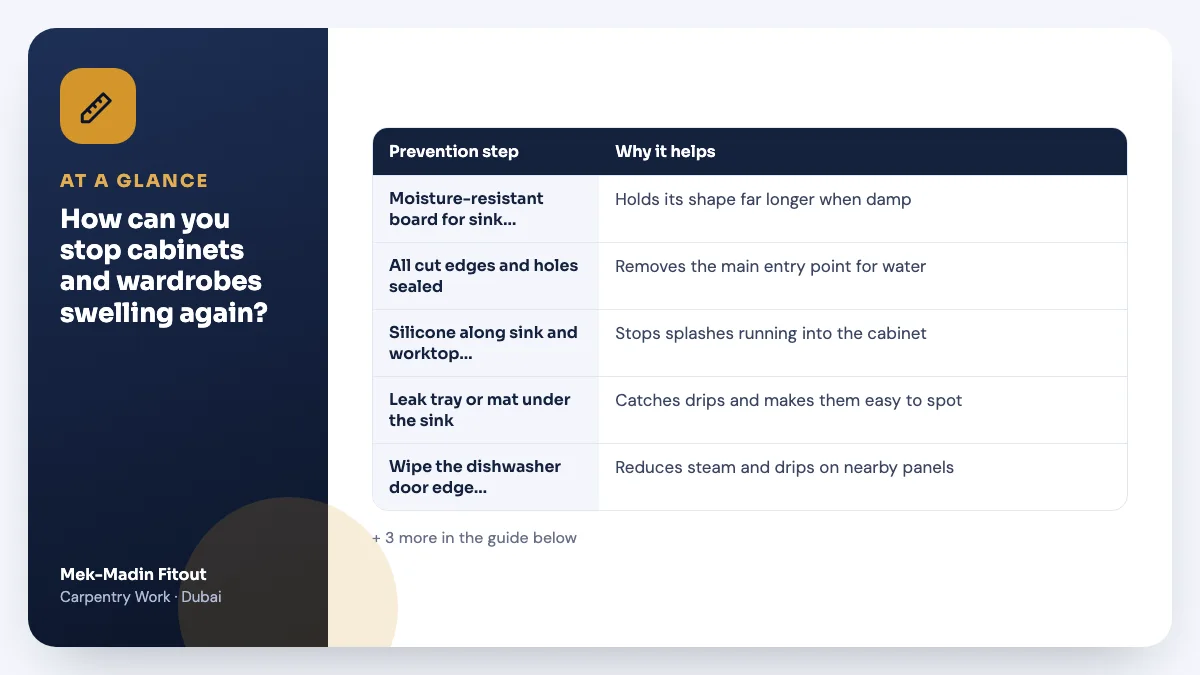
| Prevention step | Why it helps |
|---|---|
| Moisture-resistant board for sink bases and wet areas | Holds its shape far longer when damp |
| All cut edges and holes sealed | Removes the main entry point for water |
| Silicone along sink and worktop joints | Stops splashes running into the cabinet |
| Leak tray or mat under the sink | Catches drips and makes them easy to spot |
| Wipe the dishwasher door edge after use | Reduces steam and drips on nearby panels |
| Damp-mop rather than wet-mop near units | Keeps water off plinths and door bottoms |
| Regular AC servicing | Keeps drain lines clear and trays from overflowing |
| Air gap behind wardrobes on external walls | Lets air move and reduces condensation |
Check under the sink with a torch every few months to catch slow leaks early.
When should you call a carpenter for swollen cabinets?
Replacing a plinth or tightening a hinge can be a simple job, but swollen cabinets often need a carpenter. Rebuilding a sink base, matching panels or replacing damaged carcasses needs accurate cutting, the right board and careful fitting, and the cause of the water should be fixed before any new board goes in.
Mek-Madin Fitout provides carpentry work across Dubai, including swollen cabinet repairs, sink base rebuilds, panel and door replacement and wardrobe repairs. We check the cause of the damage before we start. Call or WhatsApp +971 52 884 8916 with photos of the damage, and we confirm a visit time when you call.
FAQs
Can swollen MDF be fixed by drying it out?
Usually not. Drying stops further damage, but the swollen fibres do not return to their original shape or strength. Light swelling at an edge can sometimes be sanded and sealed, but most swollen panels need replacing.
Can I just replace the cabinet doors?
Yes, if only the doors are swollen and the carcass is sound. Check the base and sides for softness first. If the carcass is damaged, new doors will not hang properly for long.
Is moisture-resistant board waterproof?
No. It resists moisture far better than standard board, but it can still swell if it sits in water for long periods. Sealed edges and fixing leaks quickly still matter.
Who pays for swollen cabinets in a rented apartment?
It often depends on the cause and the tenancy contract. A leak from the building's plumbing is usually the landlord's responsibility, while damage from misuse may fall to the tenant. Check your contract and report the problem in writing.